- Ruy López de Segura is recognized as the first unofficial world champion and the first professional chess player in history.
- His seminal work, "Libro de la invención liberal arte del juego del Axedrez," laid the foundation for modern opening theory.
- Recent historical research has corrected misconceptions about his birthplace in Zafra and his competitive record against Italian masters.
- The Spanish Opening, known worldwide as the Ruy López, remains one of the most analyzed and respected systems in elite chess.
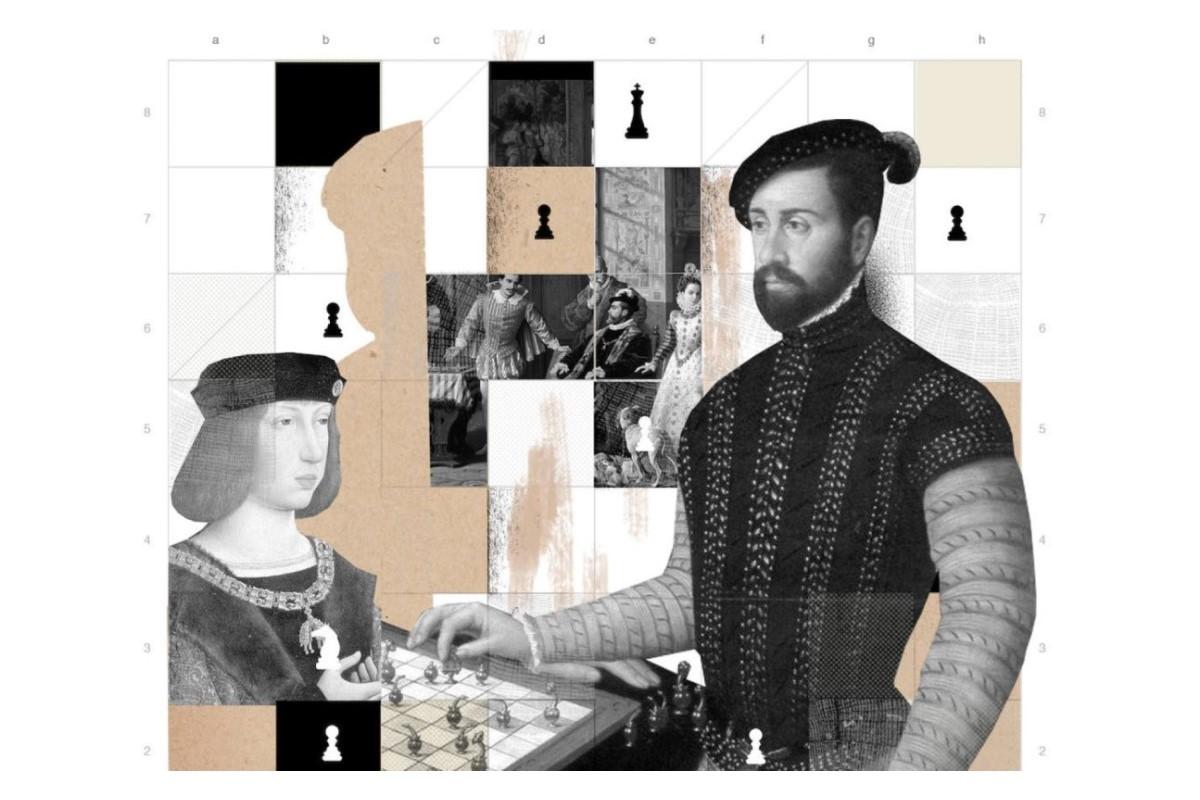
When we dive into the roots of competitive chess, one name stands above the rest from the Renaissance era: Ruy López de Segura. Born around 1540 in the town of Zafra, located in Extremadura, Spain, this figure wasn’t just a hobbyist but is widely considered the first professional chess player to ever grace the board. While history often forgets the details of the 16th century, López was a polymath—a Benedictine cleric, a scholar, and an expert grammarian who happened to be the most dominant player of his time.
For centuries, much of what we knew about him was shrouded in myth or skewed by nationalistic narratives. However, recent exhaustive research by Daniel and Francisco de Asís Gragera has shed light on his true biography, stripping away the legends to reveal a man of immense intellectual depth. From his contested residency in Zafra to his influence on the Spanish court, Ruy López represents the bridge between the slow, medieval version of the game and the dynamic, strategic battle we recognize today.
The Man Behind the Legend
Contrary to some old tales, Ruy López was not a bishop or a direct confessor to King Philip II, though he was certainly a cleric presbyter of high standing. He lived in a time of transition, where the rules of chess were evolving. It is fascinating to note that in his era, the «king’s jump» was still a thing—a primitive move where the king could leap like a knight or a bishop on its first move to escape checkmate, a rule that would absolutely wreck modern engine evaluations if it existed today.
The research into his life has been a real detective job. For instance, it was recently discovered that the commemorative plaque in Zafra had been in the wrong location since 1975. By digging through 16th-century archives and analyzing inheritance documents from his father, Hernán López, historians finally pinpointed the exact family home. This commitment to truth also helps debunk the myth that he lost to the Italian master Gio. Leonardo da Cutri, known as ‘Il Puttino’; in reality, the records show no defeats for the Spaniard in those legendary encounters.
The Father of Chess Theory
Ruy López didn’t just play the game; he codified it. In 1561, he published the «Libro de la invención liberal arte del juego del Axedrez». This wasn’t just a manual; it was the most influential chess book for two centuries until Philidor came along. In it, he broke down the game into phases, analyzed openings, and even gave psychological advice, such as positioning your opponent so the sun would glare in their eyes during a daytime match—proving that for López, winning was about everything.
His impact was so global that his work was translated into French, Italian, German, and Portuguese. Even the first Russian chess book in 1821 borrowed heavily from his findings. Using modern AI to analyze his recorded games, experts estimate that if he played today, he would have a FIDE ELO of around 2500, placing him comfortably at the of the 16th century.
The Spanish Opening: A Global Phenomenon
Most people know Ruy López today not through his biography, but through the Spanish Opening (1.e4 e5 2.Cf3 Cc6 3.Ab5). While it’s called the «Spanish Game» in Spain, the rest of the world calls it the «Ruy López.» Some argue this is a bit of a subtle snub to Spanish identity, but regardless, the opening is a that pressures the center and develops the kingside rapidly.
- The Main Line: Characterized by 3…a6 and 4.Aa4, leading to a deep struggle for central control.
- The Berlin Defense: A rock-solid wall (3…Cf6) famously used by Vladimir Kramnik to dismantle Garry Kasparov’s dominance.
- The Exchange Variation: Where White captures the knight on c6 to create for Black.
- The Marshall Attack: A daring gamble where Black sacrifices a pawn for a devastating offensive.
This opening is often described as the because of the long-term pressure White can maintain. From the tactical chaos of the Schliemann-Jaenisch Gambit to the positional grind of the Closed Variation, the Ruy López system is a testament to the that Segura first championed.
A Legacy of Professionalism
Ruy López was an unofficial world champion long before the title was formalized in 1886 with Wilhelm Steinitz. His victory in the 1575 tournament in Madrid, where he utilized an early version of the to crush ‘Il Puttino’, cemented his status. He was a , often clashing with other scholars of his time, which might explain why he eventually sought a new start by sailing to Peru with his brothers.
The fascination with his life persists because he embodied the : the obsession with study, the refinement of technique, and the drive to be the best. Whether it’s through his influence on the or the enduring popularity of his eponymous opening, the ghost of the cleric from Zafra still haunts every 64-square board.
From the dusty archives of Zafra to the high-stakes matches of modern Grandmasters, the journey of Ruy López de Segura highlights the evolution of chess from a courtly pastime to a . His contributions to opening theory and his status as the game’s first true professional ensure that he remains an of the chess world, proving that true mastery transcends the centuries.