- Ruy López de Segura is recognized as the first unofficial world champion and a pioneering professional chess player of the 16th century.
- His seminal work, 'Libro de la invención liberal arte del juego del Axedrez', shaped chess theory for two centuries.
- The Spanish Opening, known globally as the Ruy López, remains one of the most prestigious and deeply analyzed systems in elite play.
- Modern research has debunked several myths, confirming his origins in Zafra and his dominance over contemporary Italian masters.
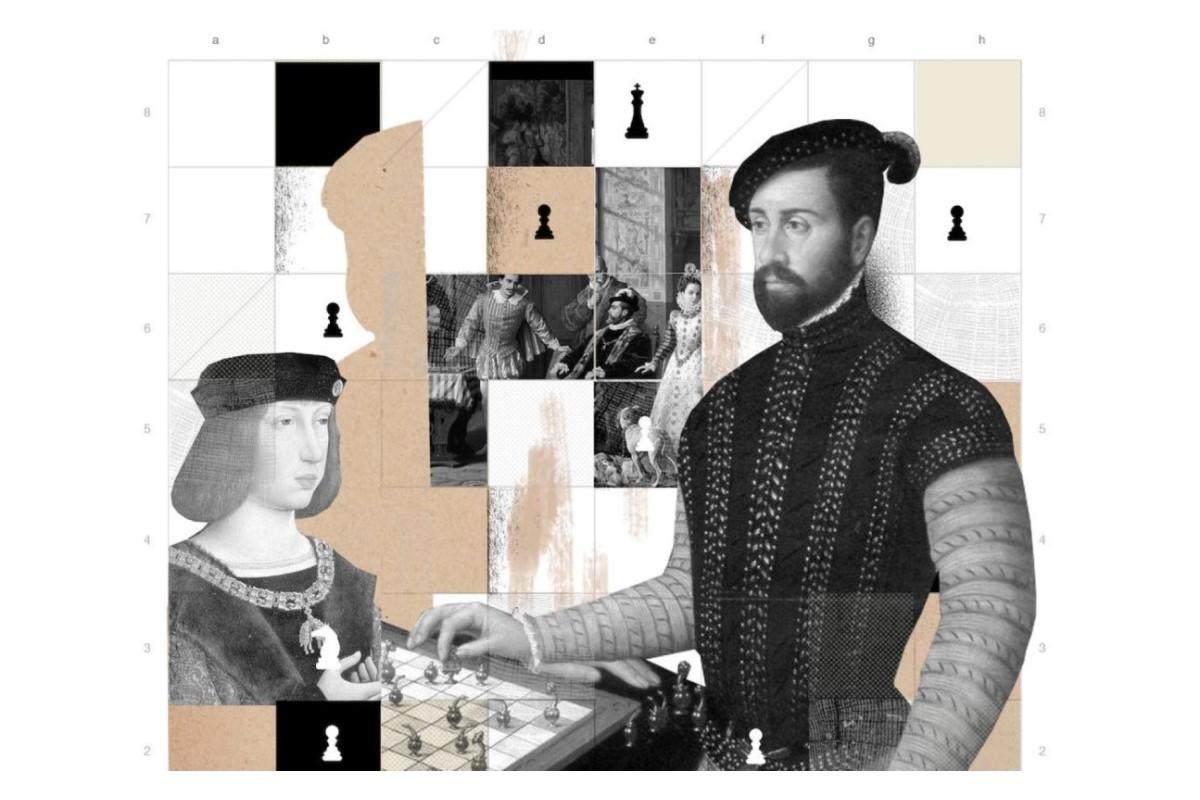
When we dive into the roots of competitive chess, one name stands out as a true titan:
For centuries, much of his life was shrouded in mystery or distorted by what some call the «Black Legend», a series of narratives designed to diminish Spanish achievements. However, recent monumental research, including a 500-page study by Daniel and Francisco de Asís Gragera, has peeled back the layers of time. They’ve managed to locate his true family home in Zafra, correcting historical errors and proving that this Basque-descended cleric was the undisputed Grandmaster of his era.
The Architect of Modern Theory
López didn’t just play the game; he codified it. In 1561, he published the Libro de la invención liberal arte del juego del Axedrez. This wasn’t just a rulebook; it was a deep dive into the phases of the game and opening strategies that remained the gold standard for two hundred years until Philidor arrived on the scene. The influence of this work was so vast that it was translated into multiple languages and even influenced early Russian chess texts.
Interestingly, his approach to the game was holistic and sometimes quirky. He believed in psychological warfare, suggesting that during a match, the opponent should be positioned so the sun would glare in their eyes, or the lamp should be placed to create shadows. To him, the 64 squares were a battlefield where every minor advantage counted. Modern AI analysis of his documented games suggests he would have held a FIDE rating of approximately 2500 if he played today.
The Legendary Duel with ‘Il Puttino’
One of the most debated moments in his career was the clash in Madrid in 1575 against the Italian master Gio. Leonardo da Cutri, better known as ‘Il Puttino’. For years, certain Italian sources and a later painting by Luigi Mussini falsely claimed that the Spaniard lost. However, historical records, specifically the Polerio manuscripts, reveal a different story: Ruy López didn’t just win; he dominated.
In one particular historic game, López utilized a King’s Gambit, a bold move that stunned the court of Philip II. He dismantled the Italian’s defense in a brief but brilliant display of tactical superiority, ending the game in a crushing victory. This victory solidified his status as the unofficial world champion and a pioneer of aggressive, theoretical play.
Understanding the Ruy López Opening
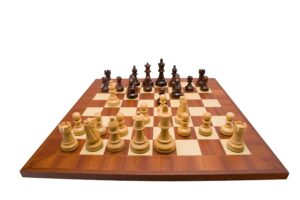
While he is forever linked to the Spanish Opening (1.e4 e5 2.Nf3 Nc6 3.Bb5), it’s a common misconception that he invented it. Rather, he was the first to analyze it with such depth that the opening eventually took his name globally. In Spain, it’s simply called the «Española», but the rest of the world uses his name, a trend seen even in modern pop culture like The Queen’s Gambit.

- The Main Line: Focuses on a long-term struggle for the center, often involving the move 3…a6 to challenge the bishop.
- The Berlin Defense: A rock-solid response (3…Nf6) that famously helped Vladimir Kramnik neutralize Garry Kasparov.
- The Exchange Variation: Where White captures the knight on c6 to double Black’s pawns, simplifying the structural battle.
- The Marshall Attack: A daring sacrifice of a pawn by Black to launch a blistering attack against the white king.
The beauty of this opening lies in its flexibility. It can lead to sharp tactical skirmishes or a slow, grinding positional squeeze—often referred to as the «Spanish Torture» because of how difficult it is for Black to find a way out of the pressure.
Myths, Realities, and Curiosities
Historical curiosity often leads to legends. There were claims that Ruy López was a bishop or a close confessor to Philip II, but records show he was actually a presbyter cleric of the Order of Saint Benedict. Furthermore, his mastery extended to linguistics and grammar, making him a true Renaissance man. His personality was reportedly quite provocative, often criticizing the scholars of his day, which may have contributed to his eventual decision to sail for Peru with his brothers.
Beyond the strategy, the game he played had different rules. For instance, he preferred the two-move castling method and utilized the «King’s jump»—a primitive rule where the king could move like a knight or a bishop in its first move to escape a checkmate. Such variations highlight how the game has evolved from a slow-paced courtly pastime into the high-speed digital sport we see today.
The legacy of the man from Zafra lives on not just in the textbooks, but in every game where 3.Bb5 is played. From his intellectual rigor and his battle against the Italian school to his status as the first true professional, Ruy López de Segura remains the foundational pillar of strategic chess, proving that a deep understanding of theory is the ultimate weapon on the board.