- Ruy López de Segura is widely regarded as the first unofficial world champion of chess due to his triumphs in the 16th century.
- He authored the seminal work "Libro de la invención liberal y arte del juego del ajedrez," pioneering the strategic analysis of the game.
- While the Spanish Opening bears his name, his historical influence extends to early gambits and the evolution of modern chess theory.
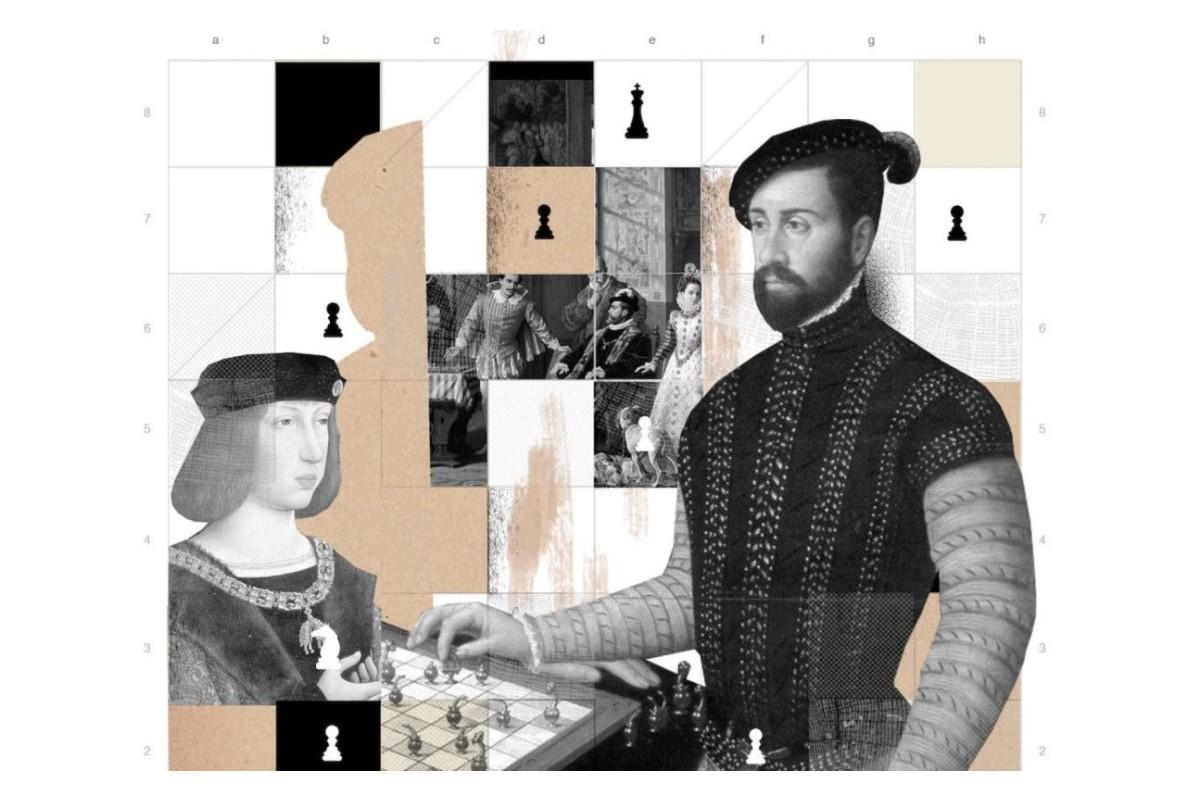
When we dive into the roots of competitive chess, one name stands out as a true pioneer: Ruy López de Segura. Born around 1540 in Zafra, Extremadura, specifically on Tetuán Street, this remarkable figure managed to blend a religious calling with an obsessive passion for the 64 squares. There is often a bit of a mix-up regarding his surname—some call him López de Sicura and others de Segura—but this is mostly due to the diverse cultural layers of his homeland, where Celtic, Moorish, and Christian influences all left their mark on local naming conventions.
Beyond his clerical duties, which eventually led him to become a Bishop, Ruy López was a man of immense intellect and social standing. His family’s influence was significant; for instance, his brother Alonso turned their family home into a convalescent hospital. However, it is his contribution to the art of chess that has kept his memory alive for centuries, transforming him from a Renaissance clergyman into a global icon for players of all skill levels.
The First «World Champion» and His Literary Impact
It is a common misconception that Ruy López invented the opening that carries his name. While he didn’t create the moves, he was the one who systematically analyzed them, bringing a level of rigor to the game that had never been seen before. In 1561, he published the «Libro de la Invención Liberal y Arte del Juego del Ajedrez», a groundbreaking treatise that sought to motivate specific moves and study openings through a fixed analytical lens.
López wasn’t just about the theory on the board; he also believed in the psychological edge. In his writings, he cheekily suggested that if you were playing during the day, you should position your opponent so the sun would shine in their eyes to distract them. Similarly, at night, he advised placing the lamp to the opponent’s right so their own hand would cast a shadow over the pieces. He clearly believed that in chess, much like in warfare, every possible advantage should be exploited.
His reputation reached such heights that in 1575, King Philip II, who was a huge fan of the game, invited him to the royal court. There, Ruy López faced off against two elite Italian masters in a high-stakes international tournament. By winning this event, he earned the unofficial title of the first world champion. Though official championships didn’t exist until Wilhelm Steinitz in 1886, the prestige of his victory in Madrid and his subsequent triumphs in Rome solidified his status as the top player of his era.
Tactical Brilliance and the King’s Gambit
One of the most fascinating anecdotes from his time at the Spanish court is that he didn’t always rely on the «Spanish Opening.» During his matches against Leonardo il Puttino, the reigning champion of Italy, Ruy López shocked the court by deploying what is considered the first recorded King’s Gambit in a major competition. This aggressive approach showed a level of daring and tactical depth that was far ahead of its time.
A historic game from 1575 illustrates his dominance. Playing white against Leonardo il Puttino, López used an early f4 push. After a series of precise exchanges and a devastating check on f7, the Italian master was forced to resign by move 12. This brief but brutal encounter served as a masterclass in how a single inaccuracies—such as playing dxe5 instead of d5—can lead to an immediate catastrophe.
Understanding the Ruy López Opening
The Ruy López, or the Spanish Opening, begins with the sequence 1.e4 e5 2.Nf3 Nc6 3.Bb5. The core strategy here is to put immediate pressure on the knight at c6, which is the primary defender of the e5 pawn. This creates a long-term fight for the center, specifically controlling the d4 and e5 squares, while allowing White to castle quickly and secure the king.
Because this opening often leads to a slow, grinding pressure that can feel suffocating for the defender, some players jokingly refer to it as the «Spanish Torture.» Depending on the response, the game can branch into several well-known paths:
- Main Line: Characterized by 3…a6, forcing the bishop to move and preparing a queenside expansion.
- Closed Variation: Where Black plays 3…Be7, keeping the position compact and solid.
- Berlin Defense: A rock-solid wall known as the «Berlin Wall,» often leading to an early queen trade to neutralize White’s attack.
- Exchange Variation: White captures the knight on c6, creating doubled pawns for Black in exchange for the bishop pair.
- Open Variation: An aggressive choice where Black captures the e4 pawn to gain active piece play.
- Schliemann-Jaenisch Gambit: A fierce counter-attack starting with 3…f5, designed to unsettle White immediately.
- Marshall Attack: A legendary line where Black sacrifices a pawn for a devastating initiative against the white king.
The Evolution of the Game
To appreciate Ruy López’s genius, one must understand that the game he played was a revolution in itself. Before the late 15th century, chess was sluggish; bishops moved only two squares, and there was no powerful Queen. The introduction of the «Mad Queen’s Chess» around 1475, described in the poem «Scachs d’amor,» changed everything. This era of modern chess saw the rise of early treatises like those by Lucena and Francesc Vicent.
Ruy López entered the scene just as these new rules were settling in. He took the foundational work of his predecessors and elevated it to a professional science. His influence persists today, as the Spanish Opening remains a staple in the repertoires of elite Grandmasters, from the battles of Lasker and Capablanca to the modern clashes between Kasparov and Karpov.
The legacy of the cleric from Zafra lives on not just in textbooks, but in the very fabric of strategic play. From his daring use of the King’s Gambit to the meticulous analysis of the Spanish Opening, his life represents the bridge between the medieval pastime and the professional sport we recognize today, proving that a blend of intellectual curiosity and competitive spirit can immortalize a name for half a millennium.