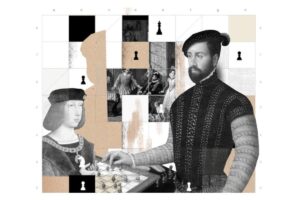
- He is widely recognized as the first unofficial world chess champion, dominating the Spanish and Italian scenes.
- The author of the seminal treatise "Libro de la invención liberal y arte del juego del Ajedrez," which laid the foundations for modern theory.
- The namesake of the famous Spanish Opening, although his influence extends far beyond a single sequence of moves.
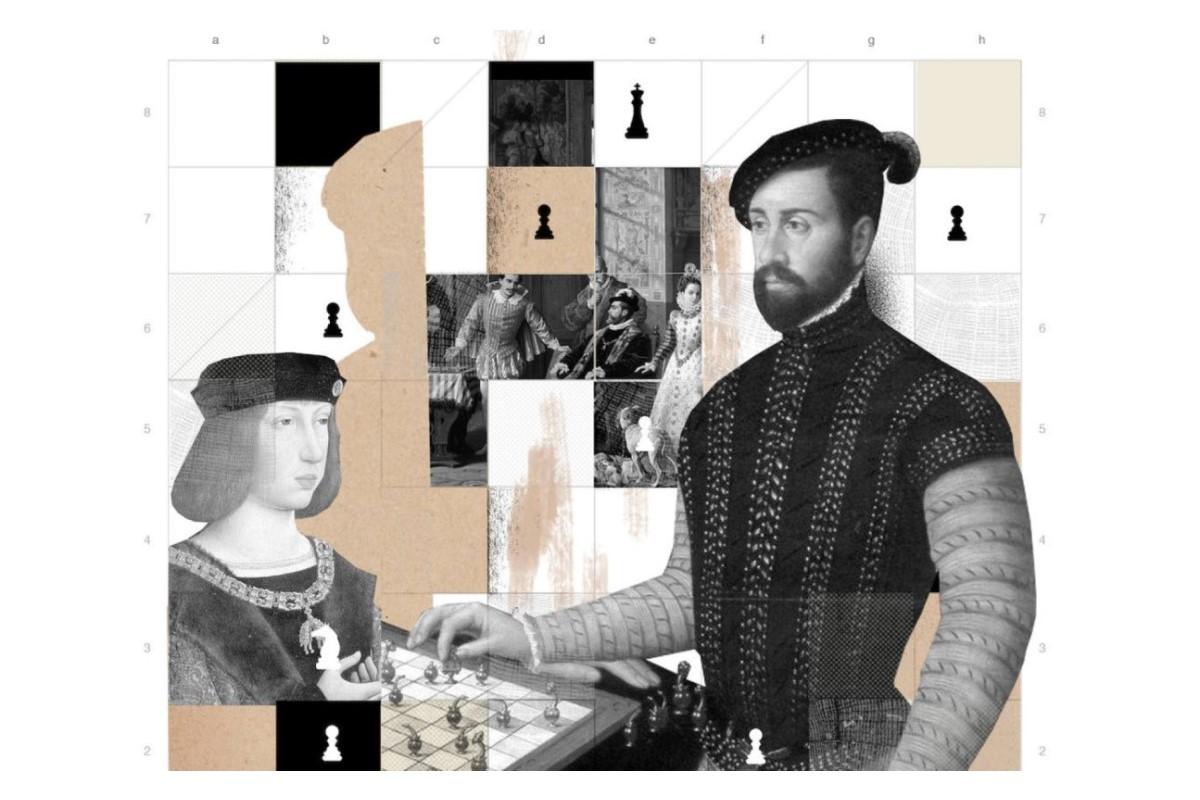
When we talk about the roots of competitive chess, one name stands out above the rest:
It is quite a trip to imagine the world he lived in. At the time, the rules were shifting; the queen had recently gained her immense power, and the bishop’s movements were being standardized. Ruy López entered the scene precisely when this «chess revolution» was taking hold, turning what was once a slow-paced courtly pastime into a rigorous intellectual battle. He didn’t just play the game; he sought to systematize and analyze it with a precision that was light-years ahead of his contemporaries.
The Path to Global Dominance
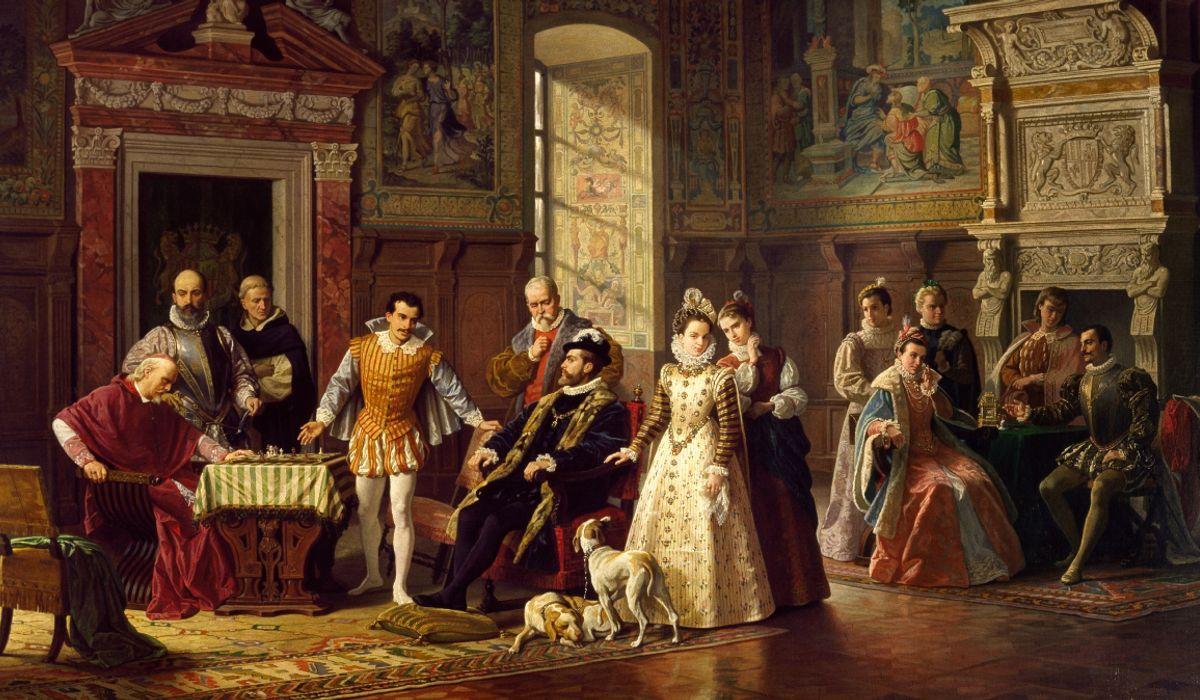
Coming from a wealthy family, Ruy López eventually became a cleric and served as a confessor and advisor to King Philip II. His rise to fame wasn’t immediate, but his talent was undeniable. In 1560, while visiting Rome for the election of Pope Pius IV, he managed to crush the best Italian players of the era, despite being only twenty years old. This feat set the stage for his reputation as a dominant force in Europe.
The Spanish court under Philip II was a hub for chess enthusiasts. The King, a great lover of the game, organized what many consider the first international tournament in history in Madrid. Although some historians argue about the exact dates—some saying 1575 and others suggesting a period between 1568 and 1570—the essence remains the same: Ruy López faced off against giants like Leonardo il Puttino. While some Italian records claim Leonardo won, Spanish researchers like the Gragera brothers argue that these were later inventions to diminish the prestige of the Spanish master.
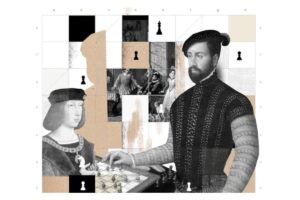
López’s dominance was so absolute that he is often hailed as the first unofficial world champion. He held this status for roughly thirty years, outclassing rivals such as Alfonso Cerón and Paolo Boi. His skill wasn’t just about intuition; he possessed a profound understanding of strategic laws and a mastery of the middle game that left his opponents bewildered. To honor his genius, Philip II even gifted him a golden collar with a chess rook hanging from it.
The Father of Chess Theory
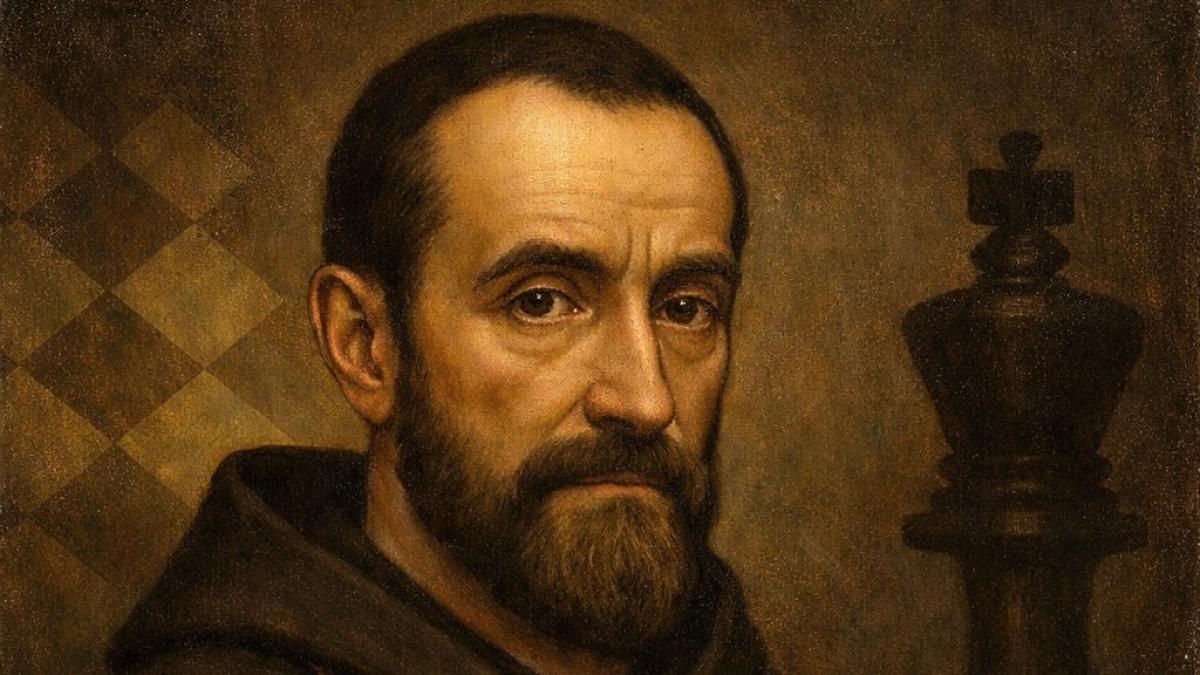
Beyond the board, Ruy López left an indelible mark through his writing. In 1561, he published the «Libro de la invención liberal y arte del juego del Ajedrez» in Alcalá de Henares. This wasn’t just a manual; it was a foundational text that bridged the gap between the medieval game and modern analysis. He was the first to detail complex moves like en passant and encouraged the practice of blindfold chess, showing a level of mental agility that was simply unprecedented.
What makes his book truly quirky is his advice on the psychology of the game. He suggested that if you played during the day, you should position your opponent so the sun would shine directly in their eyes to distract them. If playing at night, he recommended keeping the lamp to the right of the opponent so their own hand would cast a shadow over the board. It goes to show that for López, chess was as much about warfare and mental pressure as it was about logic.
The book was divided into two main sections: one focusing on the parallel between chess and war, and another diving into technical analysis. Interestingly, his work lacked diagrams, which is strange for a technical manual, but his descriptive power was so strong that it remained the primary international reference for nearly two centuries, until the arrival of Philidor in 1749. He wanted to democratize the game, moving it from the exclusive circles of the aristocracy to the general public.
The Opening and the Historic Game
Most people today know Ruy López through the Spanish Opening (1.e4 e5 2.Cf3 Cc6 3.Ab5). While he might not have literally «invented» every single move of the sequence, he was the one who promoted and analyzed it to the point of immortalizing it. It remains one of the most played and analyzed openings in history because it offers a tremendous wealth of strategic ideas for both sides.
However, he was capable of surprising everyone. In a famous encounter against Leonardo il Puttino in Madrid, he didn’t use the Spanish Opening, but instead played the first recorded King’s Gambit in a high-level competition. The game was a masterclass in efficiency: after a few decisive moves and a critical error by the Italian (specifically 5… dxe5 instead of 5… d5), López forced a resignation. This brief but brutal game proved that the slightest mistake at a high level can lead to immediate disaster.
Ruy López’s life ended in Madrid in 1580, but his influence never faded. From the streets of Zafra, where a plaque still honors his memory, to the modern screens of shows like «The Queen’s Gambit,» his ghost lingers. He was a man of culture, a grammarian, and a tireless worker who viewed chess as a symbol of intelligence and prestige.
The legacy of this Spanish cleric is a blend of strategic brilliance and historical curiosity. By combining an aggressive competitive spirit with a scholarly approach to theory, he transformed chess from a simple game into a disciplined art form. His contributions to the Spanish Opening and his pioneering treatise ensured that his name would be whispered in every chess club and analyzed in every tournament, cementing his place as the true grandfather of modern competitive play.