- He is recognized as the first unofficial world champion and the first professional chess player in history.
- Author of the influential 1561 treatise that shaped chess theory for two centuries.
- His legacy survives through the Spanish Opening, one of the most analyzed and played openings in elite chess.
- Recent historical research has corrected his biography, including the location of his ancestral home in Zafra.
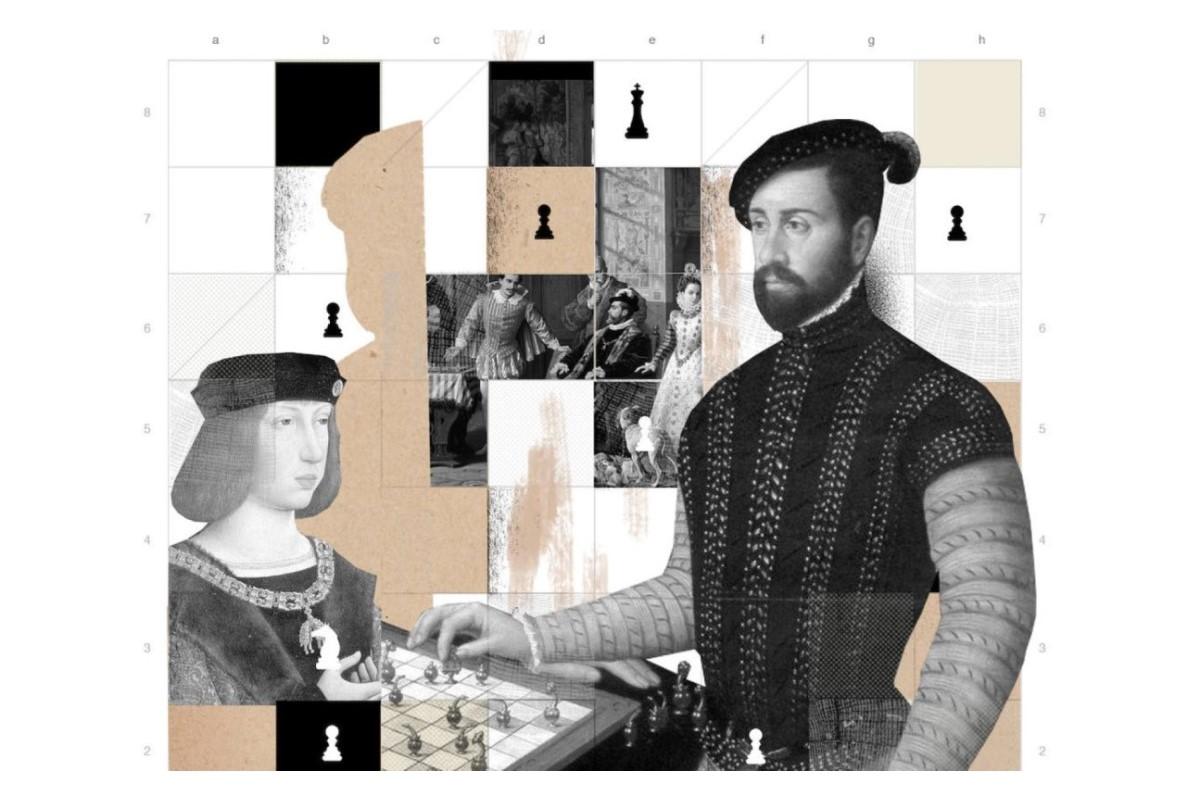
When we dive into the roots of competitive chess, one name stands out as a true pioneer: Ruy López de Segura. Born around 1540 in Zafra, Spain, this multifaceted character wasn’t just a clergyman but a visionary who fundamentally changed how the world approached the 64 squares, earning him the unofficial title of the first world champion in history.
While many modern fans recognize the «Spanish Opening» in high-level tournaments, the man behind the name remains a bit of a mystery to the general public. However, recent deep-dive research by historians like Daniel and Francisco de Asís Gragera has shed light on his life, debunking old myths and cementing his status as the first professional chess player who treated the game with scientific rigor.
The Life and Legacy of the Zafra Cleric
Ruy López was a man of immense intellect, serving as a presbyter of the Order of Saint Benedict and a skilled grammarian. Despite some legends suggesting he was a bishop or a close confessor to King Philip II, historical evidence confirms he was a learned cleric. His intellectual curiosity led him to analyze chess not as a mere pastime, but as a liberal art, which he detailed in his seminal 1561 work, Libro de la invención liberal arte del juego del Axedrez.
This book was a total game-changer for two centuries, serving as the gold standard for chess theory until Philidor arrived on the scene. It covered everything from basic rules to complex opening strategies. Interestingly, Ruy was a bit of a strategist even outside the board; he once suggested that players should position themselves so that the sun’s glare would distract their opponent during the day, or use the lamp’s shadow to their advantage at night. He played to win, plain and simple.
The Unofficial First World Champion
The claim that Ruy López was the world’s best is backed by his legendary encounters. In 1575, King Philip II hosted a tournament in Madrid where Ruy faced off against the top Italian masters of the era. His victory there, and his subsequent triumphs in Rome, established him as the dominant force of the 16th century. One of his most famous games against the Italian master Leonardo «Il Puttino» da Cutri showcases his brilliance, utilizing an early version of the King’s Gambit to secure a swift victory.
To put his skill into modern terms, researchers have used AI to analyze his games and theoretical knowledge, estimating that his level would be equivalent to a FIDE Grandmaster with a rating around 2500 ELO. This level of mastery was unheard of in the 1500s, making him the forefather of modern opening theory.
Debunking Myths and Historical Errors
For years, several misconceptions have clouded Ruy’s biography. Some historians incorrectly claimed he was born in Segura de León, but archival evidence from Zafra proves he was native to the Extremadura region. Another point of contention involves his record against Italian players; while some Italian sources attempted to minimize his achievements or claim he plagiarized others, these are largely seen as nationalistic biases designed to protect the prestige of Italian chess.
Furthermore, there’s the matter of his home. For decades, a commemorative plaque in Zafra was placed in the wrong spot. Thanks to the meticulous research of the Gragera brothers, who combed through 16th-century documents and the Zafra historical archive, the true location of the López de Segura family residence was finally discovered and officially inaugurated in early 2025.
The Evolution of the Ruy López Opening
In the chess world, the «Spanish Opening» (1.e4 e5 2.Cf3 Cc6 3.Ab5) is a cornerstone of elite play. While the opening is named after him globally, in Spain it is simply called the Apertura Española. This opening focuses on pressuring the knight on c6 to challenge the black center and gain a long-term positional advantage, often leading to a grueling struggle that some call the «Spanish Torture.»
- The Main Line: Features the move 3…a6, where White retreats the bishop to a4, preparing for a strategic battle.
- The Berlin Defense: A rock-solid response (3…Cf6) famously used by Vladimir Kramnik to neutralize Garry Kasparov.
- The Exchange Variation: Where White captures on c6 to create doubled pawns for Black.
- The Open Variation: A more aggressive approach where Black captures the e4 pawn to gain active piece play.
It is also worth noting that the rules of his time were different. Ruy preferred a two-move castling process and utilized the «King’s Leap,» a rule where the king could move like a knight or bishop in its first move to escape checkmate—a mechanic that would completely flip the script of modern chess studies if reintroduced today.
From the Renaissance to the Digital Age
Despite his importance, Ruy López remained a «great unknown» for a long time because primary sources were scarce and often written in archaic Spanish, Latin, or Italian. The effort to document his life has been monumental, involving the consultation of over a hundred libraries worldwide, including the massive collection in Cleveland. His story is now gaining traction again, with specialized publishers like Elk and Ruby bringing his history to an English-speaking audience.
The blend of high-stakes intellectual rivalry, royal patronage, and the mystery of his eventual departure to Peru makes his life perfect for a modern series. Much like the success of The Queen’s Gambit, the story of Ruy López represents the perfect intersection of sport, history, and human ambition, bridging the gap between the Renaissance and the contemporary era of Grandmasters.
Ruy López de Segura transformed chess from a slow courtly diversion into a rigorous intellectual discipline, leaving behind a legacy that survives in every game played with the Spanish Opening. Through his pioneering book, his dominance over the Italian masters, and his status as the first professional of the game, he remains the undisputed architect of chess theory, whose influence continues to shape the strategic landscape of the game centuries after his death.