- Ruy López de Segura is recognized as the first professional chess player and unofficial world champion of the 16th century.
- The Spanish Opening, or Ruy López, remains one of the most analyzed and prestigious systems in modern chess history.
- The historical research by the Gragera brothers has uncovered the true residence of López in Zafra and debunked long-standing myths.
- The opening is characterized by its strategic depth, offering a long-term pressure for white and a variety of solid defenses for black.
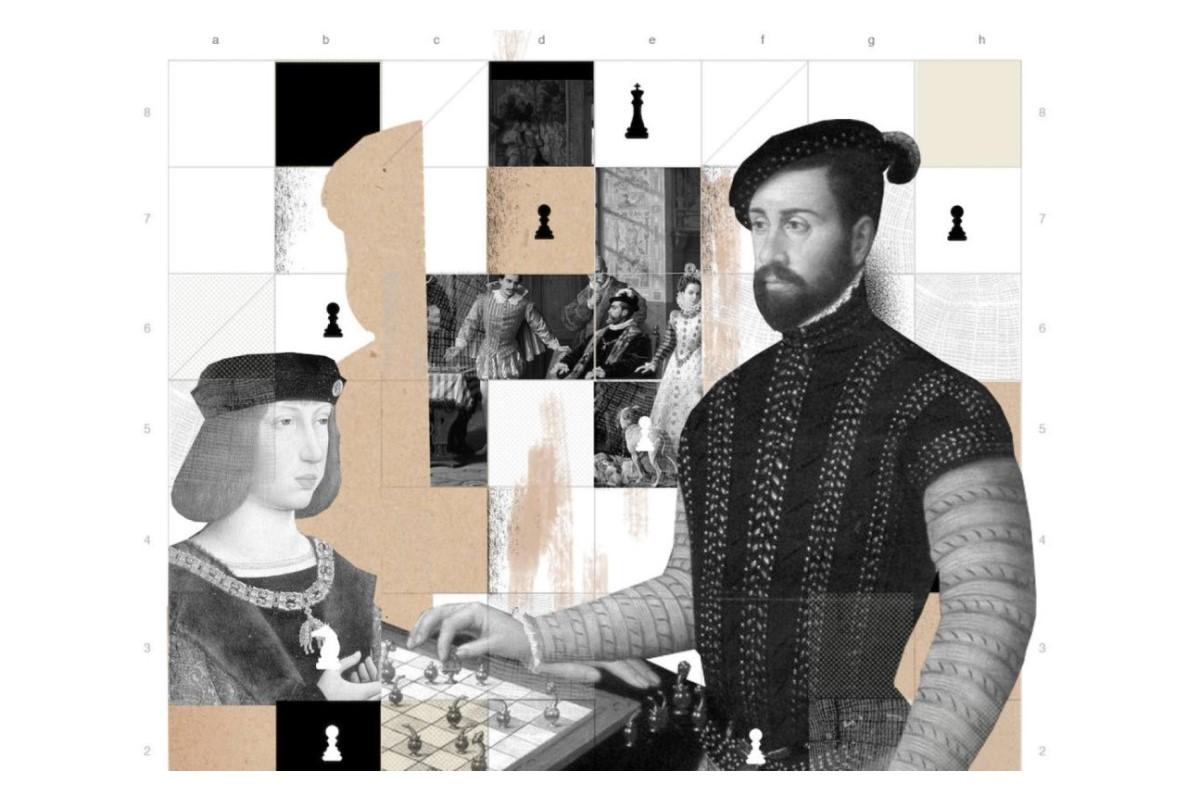
When we dive into the world of 64 squares, few names carry as much weight as Ruy López de Segura. Not only is he the namesake of one of the most feared openings for any beginner or grandmaster, but he also stands as a pivotal figure who transitioned chess from a courtly pastime into a structured discipline. Born around 1540 in the town of Zafra, this Spanish cleric was way ahead of his time, blending intellectual erudition with a predatory instinct on the board.
It is quite a trip to realize that while we today have engines and instant databases, López was carving out the foundations of chess theory in the 16th century. His influence was so massive that his writings served as the primary gold standard for players for nearly two hundred years. Whether you are interested in the strategic torture of the Spanish game or the mysterious life of the man himself, there is a wealth of history and tactical brilliance to uncover here.
The Man Behind the Moves: Ruy López de Segura
For a long time, Ruy López was something of a ghost in his own homeland, overshadowed by legends from other countries. However, recent exhaustive research by Daniel and Francisco de Asís Gragera has shed light on his true identity. Far from being just a footnote, López was a polymath, a grammarian, and a priest of the Order of Saint Benedict. He wasn’t just playing for fun; he is widely considered the first professional chess player in history.
One of the most interesting tidbits from the Gragera brothers’ research is the correction of his home address in Zafra. For decades, a plaque had been placed in the wrong spot, but archival documents from the 16th century eventually revealed the exact location of the family home. While some myths suggest he was the confessor to Philip II, records show he was primarily a brilliant cleric whose mind for strategy extended far beyond the church.
In terms of skill, using modern AI to analyze his games suggests he would have operated at a Grandmaster level, likely sporting an ELO around 2500. He dominated his rivals, including the Italian expert Gio. Leonardo da Cutri, despite later attempts by Italian historians to paint him as a plagiarist or to claim he suffered defeats that never actually happened. His book, Libro de la invención liberal y arte del juego del ajedrez, published in 1561, was a game-changer that detailed everything from basic rules to advanced opening theory.
Breaking Down the Spanish Opening
In the chess community, the Ruy López (or the Spanish Opening) is a staple. It starts with the moves 1.e4 e5 2.Cf3 Cc6 3.Ab5. The core idea here isn’t just to develop pieces, but to put immediate pressure on the knight that defends the e5 pawn. This creates a long-term strategic squeeze that can make the opponent feel like they are under a slow, relentless torture—hence the nickname «the Spanish torture».
For those playing the white side, the perks are clear: you get rapid development and a quick castle, often maintaining a positional edge for a long stretch of the game. On the flip side, the downside is the sheer mountain of theory you need to climb. Black has a staggering array of responses, making it a lifelong study for anyone who wants to truly master the line.
Key Variations and Strategic Paths
- The Main Line: Here, black plays 3…a6 to kick the bishop, and after 4.Aa4 Cf6 5.O-O, the battle for the center begins in earnest.
- The Closed Variation: Black places the bishop on e7, keeping the position compact and preparing for a maneuvering struggle.
- The Exchange Variation: White captures the knight on c6 immediately (4.Axc6), aiming to create doubled pawns for black. This is a great way to avoid deep theoretical memorization.
- The Open Variation: A more aggressive approach where black captures on e4 (5…Cxe4), trading space for piece activity.
Countering the Spanish Pressure
If you find yourself on the receiving end of the Spanish Opening, you have a few distinct paths depending on your style. For those who love a rock-solid wall, the Berlin Defense (3…Cf6) is the gold standard. It became world-famous when Vladimir Kramnik used it to neutralize Garry Kasparov in 2000. It often leads to an early queen exchange, where black accepts doubled c-pawns in exchange for a very sturdy position.
If you prefer a more combative and tactical fight, the Archangel Variation is a fantastic choice. It opens up the board and allows black to use the bishop pair to create counterplay. For the truly brave, the Schliemann-Jaenisch Gambit (3…f5) throws a grenade into the center immediately, creating unbalanced positions that are a nightmare to navigate for both players.
Then there is the Marshall Attack, a sophisticated weapon developed by Frank Marshall. By sacrificing a pawn, black launches a ferocious assault against the white king, forcing white to defend accurately or face a swift defeat.
Evolution of the Game and Historical Curiosities
It is fascinating to look at how much the game has changed since Ruy López’s era. Back then, some rules were wildly different. For instance, López preferred the castle to take two separate moves. Even more shocking was the «king’s jump», where the king could move like a knight or a bishop on its first move to escape an inevitable checkmate. If those rules existed today, they would shatter every single engine and theoretical study we have.
Moreover, the terminology of the opening reflects old political tensions. While in Spain it is called the «Apertura Española», the rest of the world calls it the «Ruy López». Some historians argue this was a way for other nations to avoid giving «Spain» as a brand the credit during the 16th century, when the Spanish Empire was the global epicenter of power.
From the early poems like Scachs d’amor to the modern era of online blitz, the journey of the Spanish game is a testament to the enduring brilliance of a Zafra cleric who dared to analyze the game scientifically. His legacy lives on not just in the books and the honored plaques in Zafra, but in every single game where a bishop lands on b5 to challenge the center.
Across the centuries, the figure of Ruy López de Segura has evolved from a mysterious historical character to a symbol of professional chess. By combining the strategic depth of his namesake opening with the rediscovery of his personal life, we see a man who was truly the father of chess theory, whose influence still dictates how millions of people play the game today.