- Ruy López de Segura is recognized as the first unofficial world champion of chess after dominating international competitions in the 16th century.
- He authored the seminal work 'Libro de la invención liberal y arte del juego del ajedrez' in 1561, pioneering modern theoretical analysis.
- The famous Spanish Opening bears his name, although he was a versatile player who also utilized the King's Gambit to defeat top rivals.
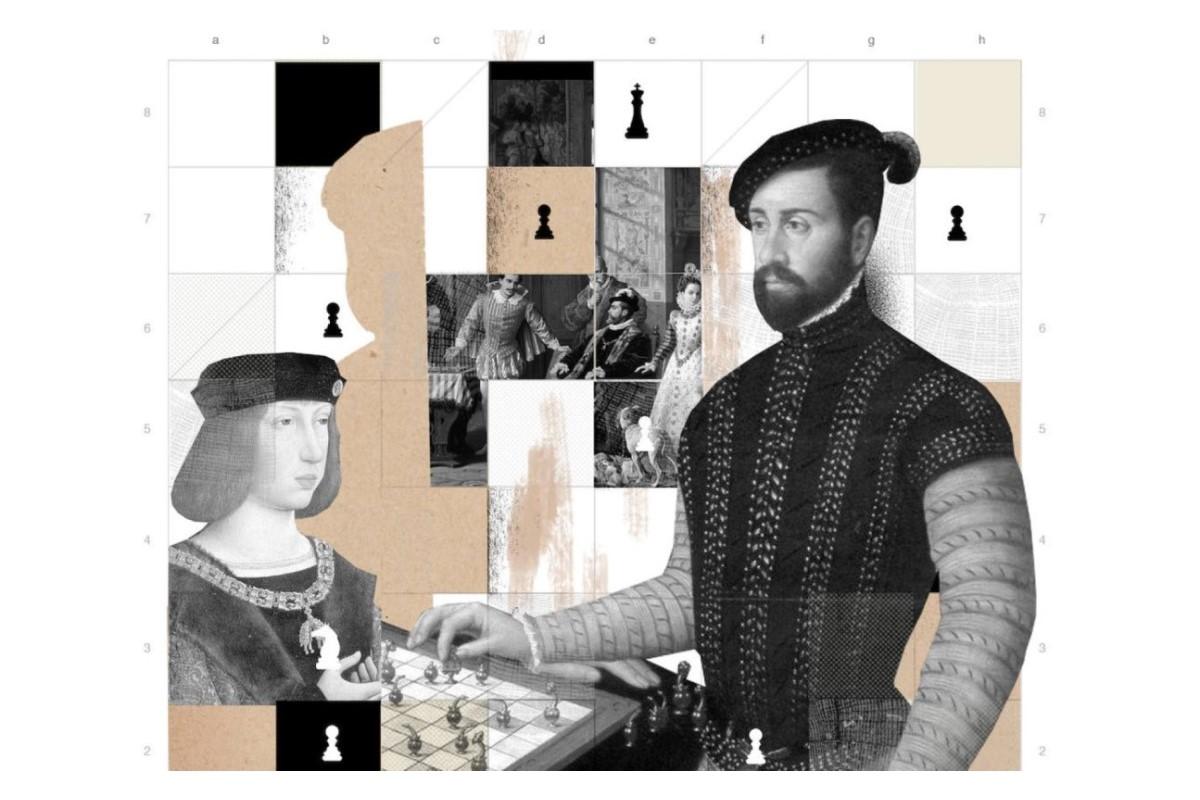
When we dive into the roots of competitive chess, one name stands out far above the rest: Ruy López de Segura. Born around 1540 in Zafra, Extremadura, in a house that once served as the hospital of San Ildefonso, this Spanish cleric became a cornerstone of the game. While the official world championship didn’t exist until 1886 with Wilhelm Steinitz, many historians and enthusiasts consider López the first unofficial world champion due to his overwhelming skill during the Renaissance.
Walking through Zafra today, you can still find the imposing building where he was born, featuring columns that oddly resemble chess towers. There is a commemorative plaque there that celebrates him not only as a champion but also as an eminent treatise writer. It is a bit of a tragedy that, as some journalists suggest, he might have received even more lavish monuments had he been born in France or Germany, but his influence on the global game is undeniable regardless of geography.
The Evolution of the Game and the Modern Revolution
To truly appreciate Ruy López’s contribution, we have to understand that the game he played was very different from the medieval version. Back then, the bishop only jumped two squares diagonally, and the queen didn’t even exist; instead, there was a piece called the alferza that moved only one square. This made the pace of play painfully slow, often used as a slow-burn flirting game between courtiers.
Everything changed around 1475 with the publication of ‘Scachs d’amor’ by three Valencian poets. This work introduced the current movement of the queen, sparking what is known as the modern chess revolution. Later, in 1495, Francesc Vicent published the first modern treatise, followed by Lucena in 1497. Ruy López entered the scene just as these new rules were settling in, inheriting a game that was suddenly faster, more aggressive, and strategically deeper.
The Master’s Mind and His Great Work
López wasn’t just a player; he was a scholar. In 1561, he wrote the ‘Libro de la invención liberal y arte del juego del ajedrez’. This wasn’t just a book of moves, but a deep dive into motivating specific plays and studying openings. He was a man of his time, and his tips were sometimes quite cunning; for instance, he suggested that if you played during the day, you should position your opponent so the sun would glare in their eyes to distract them.
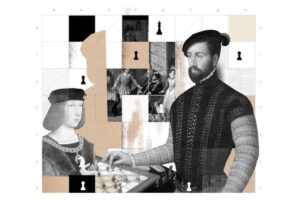
His rise to prominence was aided by his social status, eventually becoming a bishop. This position allowed him to move in high circles, leading him to the court of King Philip II, who was a massive chess fan. In 1575, the King invited López to play against the best Italian masters of the era. This tournament is often cited as the moment where the concept of a world champion first emerged, as the Spanish cleric emerged victorious against the most prestigious players of the time.
The Spanish Opening and Beyond
Most people today know him through the Ruy López opening, also called the Spanish Game. It starts with 1.e4 e5 2.Cf3 Cc6 3.Ab5. The goal here is to put pressure on the knight at c6, indirectly attacking the e5 pawn and fighting for the center. It’s a flexible and complex system that can lead to a long-term squeeze of the opponent, which is why some jokingly call it the «Spanish Torture.» Throughout history, it has evolved into various lines, such as the Berlin Defense, the Exchange Variation, and the aggressive Marshall Attack.
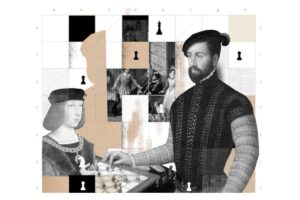
Interestingly, while the opening bears his name, he didn’t necessarily «invent» it, and he didn’t always use it. In his historic 1575 match against Leonardo il Puttino, the Italian champion, Ruy López surprised the court by playing the first recorded King’s Gambit (1.e4 e5 2.f4). He crushed the Italian master in a brief game, proving that a single mistake—like playing 5…dxe5 instead of 5…d5—could lead to immediate disaster on the board.
Strategic Variations and Legacy
The theory surrounding the Ruy López is vast. Players today still struggle with the Closed Variation, where the black bishop stays on e7, or the Open Variation, where black captures on e4 to gain active piece play. Even in the modern era, grandmasters like Kramnik used the Berlin Defense to dismantle the reigns of champions like Garry Kasparov, showing that the foundations laid by the Spanish master are still relevant in the age of supercomputers.
Ruy López de Segura was a unique blend of a man of faith and a man of war on the 64 squares. His ability to analyze the game scientifically, combined with his psychological warfare and tactical brilliance, set the gold standard for every professional player who followed. He turned chess from a courtly pastime into a rigorous intellectual discipline, ensuring his name would be spoken every time a bishop lands on b5.
The trajectory of Ruy López, from the streets of Zafra to the royal courts of Madrid and the cities of Italy, marks the transition of chess into the modern era. His legacy survives not only in the complex theories of the Spanish Opening but in the very idea of a world champion. By blending strategic depth with a competitive spirit, he paved the way for centuries of masters to explore the endless possibilities of the board.