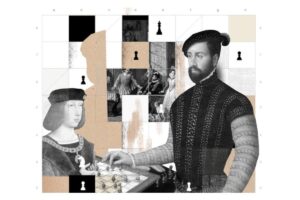
- Ruy López de Segura is recognized as the first unofficial world champion and the father of modern chess theory.
- He authored the influential book 'Libro de la invención liberal y arte del juego del axedrez' in 1561.
- Recent research has debunked several myths about his life, confirming his origin in Zafra and his dominance over Italian masters.
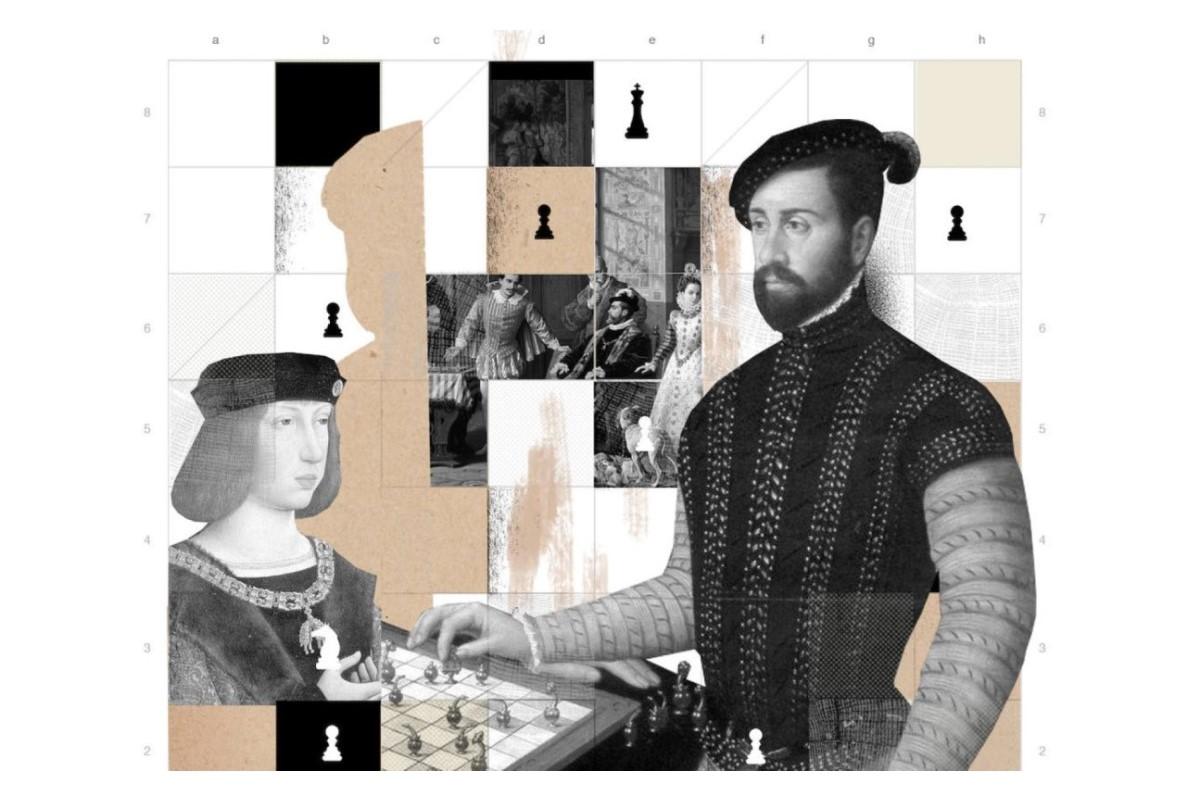
When people hear the name Ruy López, they usually think of the famous opening move in chess. However, behind that terminology lies the story of a fascinating 16th-century figure who was far more than just a name in a textbook. A Spanish priest with a sharp mind, López didn’t just play the game; he basically pioneered the professional approach to chess, blending deep study with competitive brilliance.
For a long time, much of his life remained shrouded in mystery or buried under layers of historical inaccuracies. It is only through recent, exhaustive research by historians like Daniel and Francisco de Asís Gragera—who spent years digging through ancient archives—that we have a clearer picture of this man. He wasn’t just a hobbyist; he was the first true Grandmaster of the Spanish-speaking world, operating in an era where the rules were still evolving.
The Man Behind the Legend
Born around 1540 in Zafra, Extremadura, Ruy López lived a life that crossed multiple disciplines. While some legends falsely claim he was a bishop or a close advisor to King Philip II, the records show he was a cleric presbyter of the Order of Saint Benedict. He was a true polymath: a scholar, an expert grammarian, and a deeply intellectual person who happened to be the best chess player of his time.
One of the biggest debates among historians was his birthplace. While some insisted he came from Segura de León, documented evidence confirms he was originally from Zafra. His family home has even been accurately relocated and marked with a plaque in the city, correcting a mistake that had persisted since 1975. This level of detail is crucial because it helps us understand the social environment that shaped the first professional player.
Mastering the Board and the Mind
Ruy López’s impact on the game is most evident in his 1561 masterpiece, Libro de la invención liberal arte del juego del Axedrez. This wasn’t just a collection of games; it was a comprehensive manual on theory, covering everything from the opening phase to end-game strategy. It remained the most influential chess book for two centuries, until Philidor arrived on the scene. The book was so vital that it was translated into numerous languages, including French, Italian, German, and even Russian.
Interestingly, López didn’t just focus on the pieces. He suggested some rather cheeky psychological tactics. For instance, he advised players to position the board so that the sun would shine directly into their opponent’s eyes during the day. At night, he suggested placing the lamp to the right of the adversary so their own hand would cast a shadow over the board. It seems the will to win outweighed the typical modesty of a priest!
The Unofficial World Champion
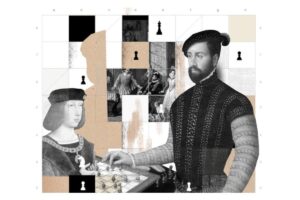
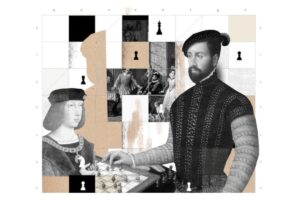
In the 16th century, there were no formal world championships with trophies and rankings, but there was undisputed dominance. Ruy López is widely regarded as the first unofficial world champion. His fame grew after King Philip II invited him to the court to face the best Italian players. In a historic match in Madrid in 1575, he faced Leonardo ‘Il Puttino’ da Cutri. While some later paintings wrongly depicted a loss for the Spaniard, historical notations prove he remained undefeated in these encounters.
His skill level was extraordinary for the period. Modern analysis using artificial intelligence suggests that his understanding of the game was equivalent to a FIDE Grandmaster with an ELO of around 2500. He didn’t just win; he dominated through a superior understanding of positioning and strategy, effectively becoming the father of the theoretical game.
Evolution of the Game and Misconceptions
The chess Ruy López played was transitioning from the medieval version to the modern one. The ‘queen’s move’ had recently been revolutionized, and the game was becoming faster and more aggressive. López was a fan of the two-move castling system and often utilized a ‘king jump’—a primitive rule that allowed the king to move like a knight or bishop on its first move to escape checkmate. This dynamic approach reflects a game that was still in a state of flux.
Throughout history, a ‘Black Legend’ of sorts affected his reputation, with Italian rivals like Alessandro Salvio trying to downplay his achievements. Some even claimed he copied his theories from Italian manuscripts, which has since been proven false. The very name of the ‘Spanish Game’ is often replaced by ‘Ruy López’ outside of Spain, perhaps as a way to distance the game from the Spanish empire that dominated the globe at the time.
From his early days in Zafra to his travels to the New World in Peru, the life of Ruy López was a blend of intellectual rigor and competitive passion. He transformed chess from a courtly pastime into a professional study, leaving a legacy that persists in every game played today. By combining rigorous documentation with a passion for the 64 squares, we can finally recognize him as the undisputed pioneer of professional chess.