- Ruy López de Segura was a pioneering 16th-century Spanish cleric and author who revolutionized chess theory through his seminal work.
- Although often called the first world champion, his status is largely unofficial since formal championships didn't exist until the late 19th century.
- He is immortalized by the "Spanish Opening," a complex strategy still used by elite grandmasters today to exert long-term pressure on the center.
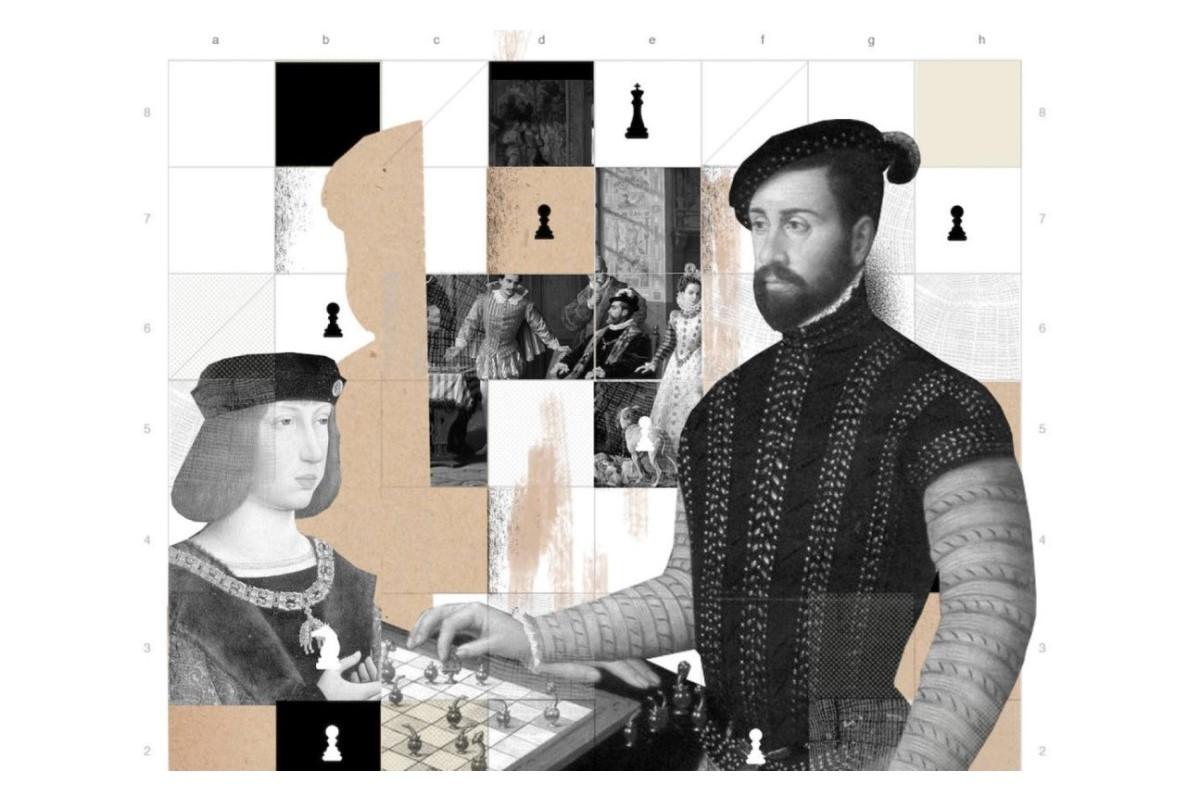
When we dive into the roots of modern chess, one name consistently pops up as a cornerstone of the game: Ruy López de Segura. Born around 1530 or 1540 in Zafra, Extremadura, this Spanish cleric wasn’t just a man of the cloth but a brilliant mind who saw the chessboard as a battlefield of logic and strategy. His life is wrapped in a mix of historical records and local legends, making him one of the most intriguing figures in the history of the royal game.
It is quite common to find a bit of a muddle regarding his full name, with some sources mentioning Ruy López de Sicura and others de Segura. This inconsistency likely stems from the diverse cultural layers of his homeland, where Celts, Romans, Muslims, and Christians all left their mark. Beyond his religious duties as a presbyter, Ruy’s true passion lay in analyzing the 64 squares, a pursuit that would eventually lead him to be recognized as the first great theorist of the era.
The Path to Mastery and the First «World Champion»
Ruy López didn’t just play chess; he studied it with a scientific rigor that was unheard of at the time. After achieving the rank of bachiller, he traveled to Rome around 1560. While there, he faced off against the most formidable Italian players of his day. He realized that the existing manuals, such as those by Damiano, were riddled with mistakes, which prompted him to write his own definitive guide: the Libro de la invención liberal y arte del juego del ajedrez in 1561.
Many historians and enthusiasts refer to him as the first world champion. While this is a bit of a stretch—since official world titles didn’t exist until Wilhelm Steinitz in 1886—the title is given unofficially due to his undisputed dominance. This fame was cemented during a legendary tournament in Madrid, likely around 1575, where he was invited by King Philip II to compete against Italian masters. Despite some older accounts suggesting the Italian Leonardo «Il Puttino» won, recent deep-dive research indicates that López was actually the victor.
Interestingly, Ruy’s approach to the game was quite cutthroat. In his writings, he suggested psychological warfare, such as positioning your opponent so the sun would blind them during a day game, or placing the lamp to the right of the rival at night so their own hand would cast a shadow over the board. For Ruy, winning was everything, and the chessboard was just as ruthless as a real war.
The Evolution of the Spanish Opening
Even though he is world-famous for the Ruy López opening (1.e4 e5 2.Nf3 Nc6 3.Bb5), there is a common misconception that he invented it. In reality, he was the first to analyze it deeply and explain its strategic nuances in his book. This opening, also known as the Spanish Game, focuses on putting indirect pressure on the e5 pawn by attacking its defender on c6, aiming for long-term central control.
- The Main Line: Involves the move 3…a6, where whites usually retreat the bishop to a4, leading to a complex struggle for the center.
- The Berlin Defense: A rock-solid response (3…Nf6) that often leads to early queen trades and is known for being incredibly hard to crack.
- The Exchange Variation: Where white captures the knight on c6, creating doubled pawns for black in exchange for the bishop pair.
- The Marshall Attack: A daring gambit where black sacrifices a pawn to launch a blistering offensive against the white king.
The beauty of this opening is that it allows for both tactical fireworks and slow, positional grinding. Because it is so difficult for black to secure a clear advantage, some players jokingly refer to facing it as the «Spanish torture.»
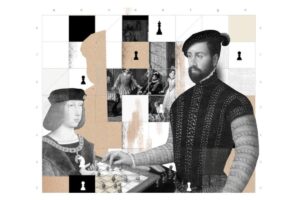
A Historic Clash: López vs. Il Puttino
One of the most celebrated moments in his career was the match against Leonardo il Puttino in 1575. In a surprising twist, Ruy didn’t even use the Spanish Opening. Instead, he unleashed what is considered the first King’s Gambit in a high-level competition. The game was a short but brutal demonstration of precision. After a series of aggressive moves, the Italian master committed a slight error at move 5 (playing 5…dxe5 instead of 5…d5), which led to a rapid collapse and a victory for the Spaniard.
Recent investigations into the Paris 955 manuscript have shed new light on this rivalry, showing that Ruy López likely never lost a single contest against Leonardo. This reinforces his status as the dominant force of 16th-century chess.
The Mystery of His Final Years
For centuries, legends claimed Ruy was the confessor to King Philip II or a powerful bishop. However, modern research has debunked many of these myths. In reality, he was a cleric presbyter. The most shocking discovery regarding his life is his departure from Europe. Records from the Archivo de Indias in Seville reveal that on October 12, 1572, Ruy set sail for Peru, possibly to join his brothers Alonso and Pedro.
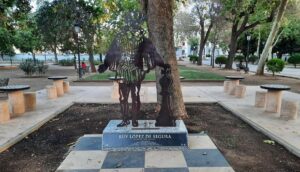
Since there is no record of him ever returning to Spain, it is widely believed that he passed away in the Americas. This adds a layer of mystery to his legacy, as he vanished from the European scene just as his influence on the game was beginning to peak. To honor his memory, a new plaque was installed in January 2025 at the exact location of his family home in the Plaza Grande of Zafra.
The enduring image of Ruy López de Segura is that of a man who bridged the gap between the medieval and modern eras of chess. From his pioneering treatise that influenced players for two centuries to the strategic depth of the opening that bears his name, his impact is undeniable. He remains the archetype of the chess scholar, a figure whose life of faith and intellectual rigor paved the way for every grandmaster that followed.