- Ruy López is recognized as the first professional chess player and unofficial world champion, pioneering modern theory in the 16th century.
- His seminal work, "Libro de la invención liberal arte del juego del Axedrez," shaped the game for two centuries and gave rise to the famous Spanish Opening.
- Recent historical research by Daniel and Francisco Gragera has debunked long-standing myths about his life, residence, and competitive record.
When we talk about the roots of competitive chess, one name stands above the rest:
For centuries, much of what we knew about him was shrouded in mystery or based on shaky legends. However, a massive research effort led by Daniel and Francisco de Asís Gragera has finally brought the real man out of the shadows. Through a monumental study involving hundreds of primary sources and digital archives, they’ve peeled back the layers of the «Black Legend» and myths to reveal a polymath and erudite who dominated the 64 squares long before the era of Grandmasters.
The Man Behind the Legend
Born around 1530 in Zafra, Badajoz, Ruy López showed an uncanny talent for the game from a very young age. Historical records, including mentions in Sebastián de Covarrubias’s works, describe a child in Zafra whose skill was so overwhelming that everyone recognized his superiority. He didn’t just play chess; he pursued a deep academic life, becoming a bachiller and a presbyter of the Order of St. Benedict, mastering Latin grammar and other scholarly pursuits.
His journey took him to Rome around 1560, where he faced off against the top Italian players of the day. It was here that he encountered the works of Damiano, finding them lacking and riddled with errors. This intellectual friction sparked the creation of his masterpiece in 1561, «Libro de la invención liberal arte del juego del Axedrez». This book wasn’t just a manual; it was the cornerstone of modern chess theory for the next two hundred years, influencing players across Europe and eventually reaching Russia in the 19th century.
The Spanish Opening and Theoretical Mastery
Most chess enthusiasts know Ruy López through the opening that bears his name. Starting with 1.e4 e5 2.Nf3 Nc6 3.Bb5, the «Spanish Opening» is designed to put immediate pressure on the defender of the e5 pawn. While it’s a staple in elite repertoires today, in the 16th century, this approach was revolutionary. López is often called the «father of the game’s theory» because he was the first to systematically explain opening patterns and strategic goals.
Interestingly, the naming of the opening reveals a bit of historical tension. In Spain, it’s called the Apertura Española, but the rest of the world calls it the Ruy López. Some historians suggest this was a way for other nations to downplay Spanish influence during the height of Philip II’s empire, preferring to name the move after the individual rather than the nation.
Debunking Historical Myths
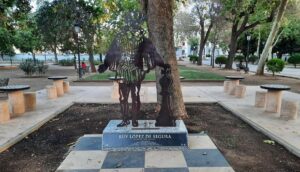
For a long time, popular narratives claimed Ruy López was a close counselor or confessor to King Philip II, or even a bishop. However, rigorous research shows these were mere fabrications. He was a cleric, yes, but not a high-ranking church official or a political advisor. Another point of contention was his birthplace; some claimed he was from Segura de León, but documents prove he was born and raised in Zafra. The Gragera brothers even managed to locate his exact family home, correcting a plaque that had been misplaced since 1975.
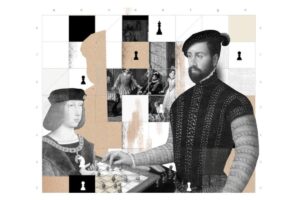
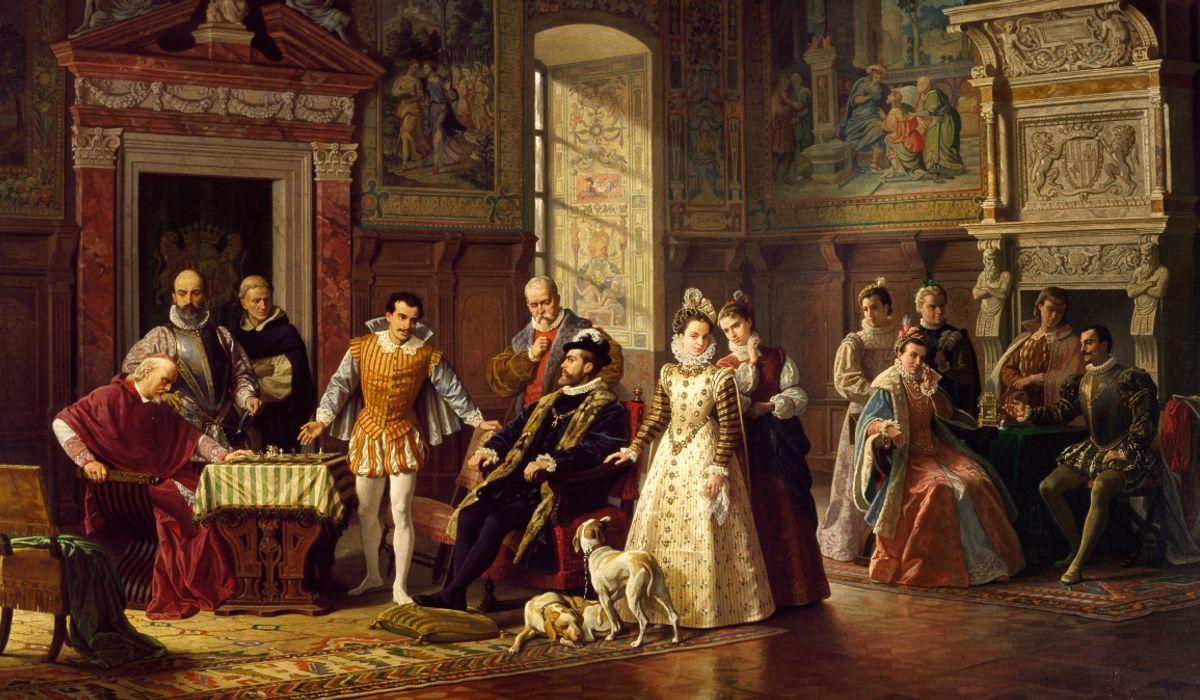
Perhaps the most heated debate surrounds his rivalry with Giovanni Leonardo da Cutri, known as «Il Puttino.» For years, a painting by Luigi Mussini and claims by Italian authors suggested that López lost a famous exhibition in Madrid. But when you dig into the Polerio manuscripts (Paris 955), the truth emerges: there is no record of Ruy López losing to Leonardo. The Spanish master maintained his supremacy, though the rivalry was as intense as any modern sports clash.
A Forgotten Era of Rules
Chess in the 1500s was a different beast. While the «modern» movements of the Queen and Bishop had recently been introduced, some curious rules persisted. Ruy López, for instance, preferred a two-move castling process, believing that moving two pieces in one turn gave too much of an advantage. Even more wild was the «King’s jump,» a primitive rule where the King could move like a knight or a bishop for a single move to escape a checkmate.
Despite these archaic quirks, a modern AI analysis of his games suggests that Ruy López would have been a Grandmaster by today’s standards, with an estimated ELO rating around 2500. This reinforces his status as the unofficial first world champion, as he was clearly the most dominant force of his era.
The Final Chapter and Legacy
The end of Ruy López’s life is as mysterious as his beginnings. Records from the Archive of the Indies in Seville show that he boarded a ship to Peru on October 12, 1572, likely to join his brothers Alonso and Pedro. There is no evidence that he ever returned to Spain, leading historians to conclude that he passed away in the Americas. This sudden departure may have been fueled by his polemical nature; he was known to criticize other scholars harshly, which likely made him a few powerful enemies at home.
The rediscovery of his life through the book «Ruy López de Segura: La cara oculta del tablero» ensures that his contribution is no longer overlooked. By combining digital forensics, visits to dozens of global libraries, and a deep dive into 16th-century manuscripts, the Gragera brothers have rescued the image of a man who was not just a player, but a visionary of the 64 squares. This journey from the streets of Zafra to the courts of Rome and eventually to the New World defines a legacy of intellectual courage and unmatched strategic brilliance that continues to influence every game of chess played today.