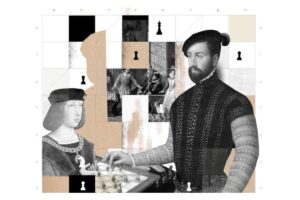
- Ruy López is widely recognized as the first unofficial world champion and the first professional chess player in history.
- He revolutionized the game with his influential 1561 treatise, laying the groundwork for modern opening theory.
- His enduring legacy lives on through the famous 'Spanish Game' opening, which remains a staple in elite competitive play.
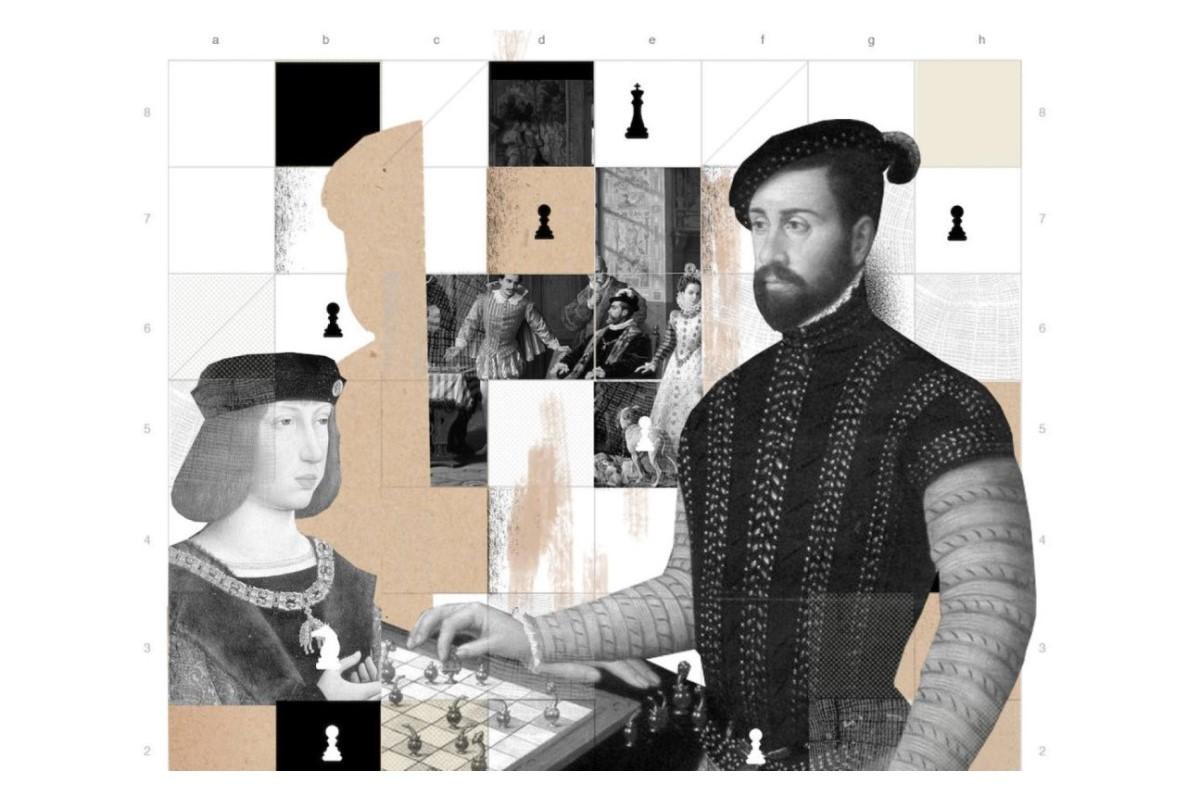
When we dive into the roots of competitive chess, one name stands above the rest from the Renaissance era: Ruy López de Segura. Born around 1540 in Zafra, Extremadura, this enigmatic figure wasn’t just a hobbyist; he is regarded by many historians as the very first professional chess player to ever grace the board, blending deep intellectual rigor with a competitive spirit that was way ahead of its time.
Despite his immense impact, López remained a relatively obscure figure for centuries, often overshadowed by the legends of later eras. However, recent exhaustive research—including a monumental 500-page study by Daniel and Francisco de Asís Gragera—has helped uncover the hidden face of the board, clarifying his origins in Zafra and debunking long-standing myths that tried to attribute his birth to other regions or misrepresent his match records.
The Man Behind the Legend
Ruy López was far from being just a gamer. He was a Benedictine clérigo presbítero, a scholar, and a master grammarian. His polymath nature allowed him to approach chess not as a mere pastime, but as a liberal art. While some old tales suggest he was the personal confessor or bishop to King Philip II, records confirm he was a high-ranking cleric, though perhaps not the bishop some legends claim. He was known to be a polemic personality, often clashing with other intellectuals of his day, which might explain why he eventually sought a new start in the Americas, traveling to Peru with his brothers.
One of the most fascinating aspects of his life is the search for his physical footprint. For decades, a commemorative plaque in Zafra was placed in the wrong spot. It took years of digging through 16th-century archives and analyzing inheritance documents from his father, Hernán López, to finally locate the exact family residence, a discovery that was officially inaugurated in early 2025.
Revolutionizing Chess Theory
Before López, chess was in a state of transition. The modern rules regarding the Queen and Bishop had only recently emerged in the late 15th century. In 1561, Ruy López published his masterpiece, «Libro de la invención liberal y arte del juego del Axedrez». This wasn’t just a rulebook; it was the first serious attempt to systematize opening theory and analyze the game’s phases. This work was so influential that it remained the gold standard for two centuries until Philidor arrived on the scene.
Interestingly, López’s approach to the game included some psychological warfare. He suggested that if you played during the day, you should position your opponent so the sun would shine directly in their eyes. At night, he recommended placing the lamp to the right of the rival so their own hand would cast a shadow over the board. It goes to show that for the first pro, winning was about more than just the moves.
The Unofficial World Champion
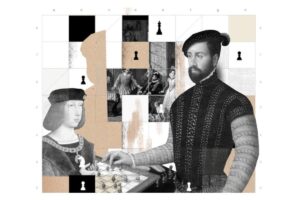
The title of «World Champion» didn’t officially exist until 1886, but Ruy López is widely viewed as the first unofficial champion. This reputation was cemented during a famous tournament in Madrid in 1575, organized by King Philip II. López faced off against the best Italian masters of the time, including the formidable Gio. Leonardo da Cutri, known as ‘Il Puttino’. Contrary to some Italian narratives that tried to paint him as a loser, the records in the Polerio manuscripts suggest López dominated the competition.
In one particularly striking game, López utilized a King’s Gambit—a bold move that shocked the court. He managed to dismantle Il Puttino’s defenses in a brief but brutal fashion, proving that his strategic depth was unmatched. Modern analysis using AI suggests that López’s skill level would translate to a FIDE Elo of approximately 2500, which is essentially Grandmaster level by today’s standards.
The Legacy of the Spanish Opening
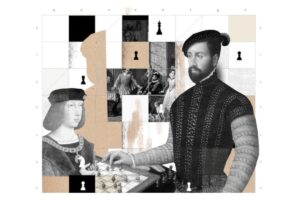
Most people today know Ruy López through the Ruy López Opening (or the Spanish Game), defined by the moves 1.e4 e5 2.Nf3 Nc6 3.Bb5. While he didn’t exactly «invent» the opening, he was the first to deeply analyze its potential. The goal of 3.Bb5 is to put pressure on the knight that defends the e5 pawn, fighting for central control. In the chess world, this opening is sometimes called the «Spanish Torture» because of the long-term pressure the white pieces can exert on the black position.
- Main Line: Involves the move 3…a6, where white retreats the bishop to a4, preparing for a slow battle for the center.
- Closed Variation: The black bishop is placed on e7, keeping the position solid and contained.
- Berlin Defense: A rock-solid response (3…Nf6) famously used by Kramnik to challenge Kasparov.
- Exchange Variation: White captures the knight on c6 to double black’s pawns, simplifying the structure.
- Open Variation: Black plays 5…Nxe4, sacrificing space for active piece play.
The distinction between the names «Ruy López» and «Spanish Opening» is often a matter of geography and politics. In Spain, it’s the Apertura Española, while the rest of the world calls it the Ruy López. Some historians argue this was a way for rival nations in the 16th century to avoid highlighting the global dominance of the Spanish Empire under Philip II.
From his early days in Zafra to his intellectual battles in the Spanish court, Ruy López de Segura transformed a medieval pastime into a scientific pursuit. By combining academic rigor with an aggressive competitive edge, he paved the way for every Grandmaster who followed, leaving behind a theoretical blueprint that is still studied by millions of players in the digital age.