- Ruy López de Segura is recognized as the first unofficial world champion and the pioneer of professional chess in the 16th century.
- He authored the influential book "Libro de la invención liberal arte del juego del Axedrez" in 1561, shaping chess theory for two centuries.
- The famous Spanish Opening, known globally as the Ruy López, remains one of the most analyzed and played openings in elite chess today.
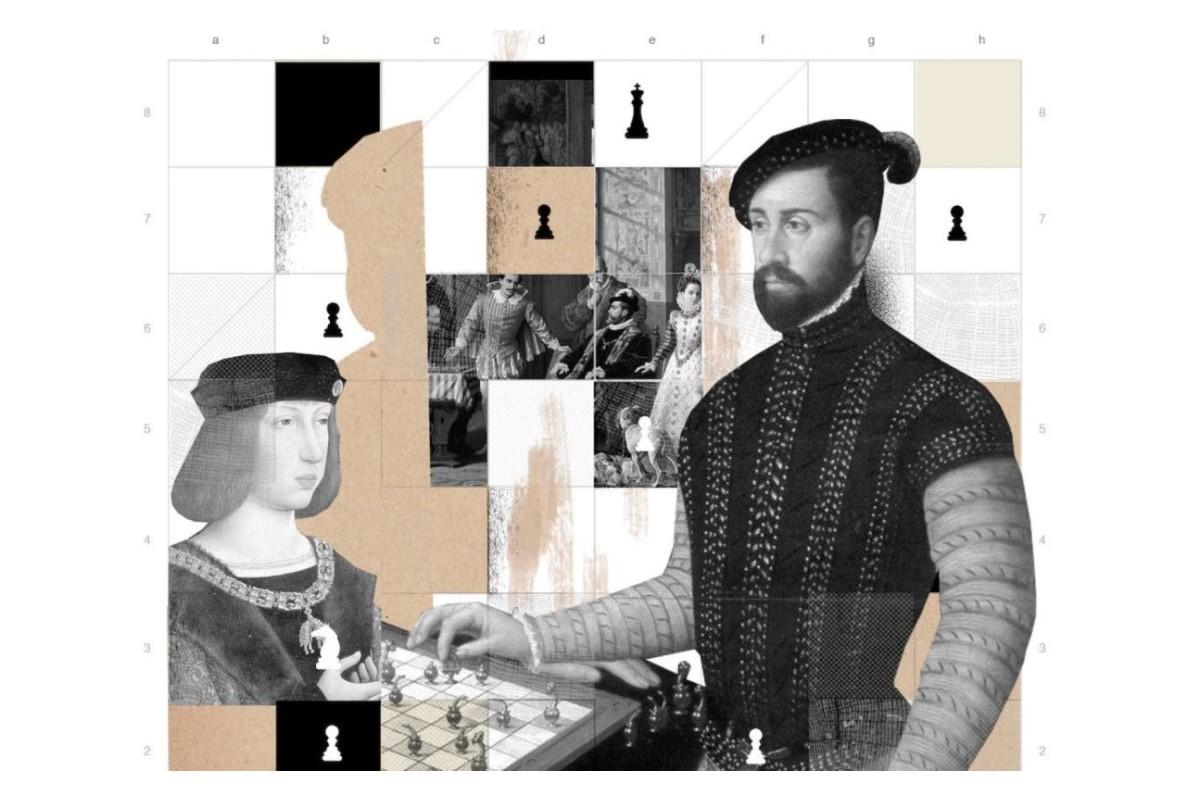
When we dive into the roots of competitive chess, one name stands out above the rest from the Renaissance era: Ruy López de Segura. Born around 1540 in Zafra, Extremadura, this Spanish cleric didn’t just play the game; he fundamentally changed how we understand it. While the concept of a formal world championship didn’t exist until the late 19th century, historians often label him as the first unofficial world champion due to his sheer dominance over his contemporaries.
It’s quite a trip to realize that for centuries, Ruy López remained a somewhat obscure figure, often overshadowed by legends from other countries. However, modern research and extensive documentation from the 16th century have brought his legacy back to the spotlight. He wasn’t just a hobbyist; he was a true polymath, an erudite grammarian, and a member of the Benedictine order who happened to be the most formidable chess mind of his time.
The Life and Legacy of a Zafrense Legend
For a long time, there was a bit of a mess regarding his origins, with some claiming he was from Segura de León. But if you dig into the historical archives of Zafra, it’s crystal clear that he was born and raised there. In fact, a long-standing error on a local plaque was recently corrected in January 2025 after researchers spent months piecing together the puzzle of his family’s actual residence.
López was a complex character—some might say a bit of a firebrand. He was known to be highly polemical, often criticizing the scholars of his day, which likely earned him a few enemies. This friction might be why he eventually decided to leave the peninsula and head to the New World, sailing for Peru with his brothers Alonso and Pedro to start a new chapter.
In terms of his skill level, if we were to translate his game to modern standards, AI analysis suggests he would have played at a Grandmaster level, likely hovering around a 2500 FIDE ELO. That’s an insane feat considering he was playing in the 1500s without the benefit of computers or modern databases.
The Father of Chess Theory
Ruy López didn’t just win games; he wrote the playbook. In 1561, he published the «Libro de la invención liberal arte del juego del Axedrez». This wasn’t just a collection of moves; it was a comprehensive guide on rules and strategy that dominated the chess world for nearly two hundred years until Philidor came along. His work was so influential that it was translated into multiple languages, including French, Italian, German, and Portuguese.
Interestingly, López believed in some psychological warfare tactics that would be frowned upon today. He suggested that if you played during the day, you should position your opponent so the sun would glare in their eyes. At night, he recommended placing the lamp to the right of the rival so their own hand would cast a shadow over the board. To him, chess was like war, and every little edge counted.
- The King’s Leap: In his era, the king could occasionally «jump» or move like a knight in its first move to escape checkmate.
- Castling: López preferred the two-move castling process, feeling that moving two pieces in one go was too great an advantage.
The Clash with «Il Puttino»
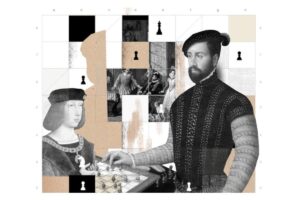
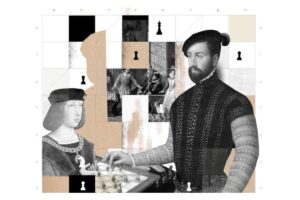
One of the most storied moments of his career was the tournament organized by King Philip II in Madrid in 1575. The Spanish king, a huge chess fan, invited the best Italian masters of the time to compete. It was here that Ruy López cemented his status, defeating the Italian champion Gio. Leonardo da Cutri, better known as «Il Puttino».
There’s a bit of a historical grudge here. Some Italian sources tried to claim a victory for Cutri, and a painting by Luigi Mussini later reinforced this error. However, the manuscripts of Polerio show that López didn’t lose. In a legendary game from that era, López used a King’s Gambit—one of the first recorded instances in such a high-level competition—to dismantle his opponent in a brief but brilliant fashion.
The Spanish Opening: A Global Phenomenon
Most people today know Ruy López not through his biography, but through the Spanish Opening (1.e4 e5 2.Nf3 Nc6 3.Bb5). While he didn’t technically invent the move, he was the first to analyze it deeply. In Spain, it’s simply called the «Spanish», but the rest of the world calls it the Ruy López, a naming convention that persists even in modern pop culture like The Queen’s Gambit.
This opening is feared by many as the «Spanish Torture» because it creates a long-term, suffocating pressure on the black pieces. It’s a complex struggle for the center that can lead to various high-level paths:
- The Berlin Defense: A rock-solid wall often used to force a draw, famously used by Kramnik against Kasparov.
- The Exchange Variation: Where White captures the knight on c6 to double Black’s pawns.
- The Marshall Attack: A daring gambit where Black sacrifices a pawn for a devastating initiative.
From the Closed Variation to the aggressive Schliemann-Jaenisch Gambit, the theory surrounding this opening has grown into a mountain of knowledge. It remains a staple for elite players because it balances positional pressure with tactical fireworks.
The story of Ruy López de Segura is a fascinating blend of historical detective work and sporting genius. From his disputed birthplace in Zafra to his intellectual battles in the court of Philip II, he laid the groundwork for everything we know about professional chess. His transition from a Benedictine cleric to the most influential theorist of the Renaissance proves that his mastery of the 64 squares was truly ahead of its time.