- Ruy López is recognized as one of the most influential early chess theorists and an unofficial world champion.
- He authored the seminal work "Libro de la Invención Liberal y Arte del Juego del Ajedrez" in 1561.
- His name is eternally linked to the Spanish Opening, one of the most analyzed and played sequences in modern chess.
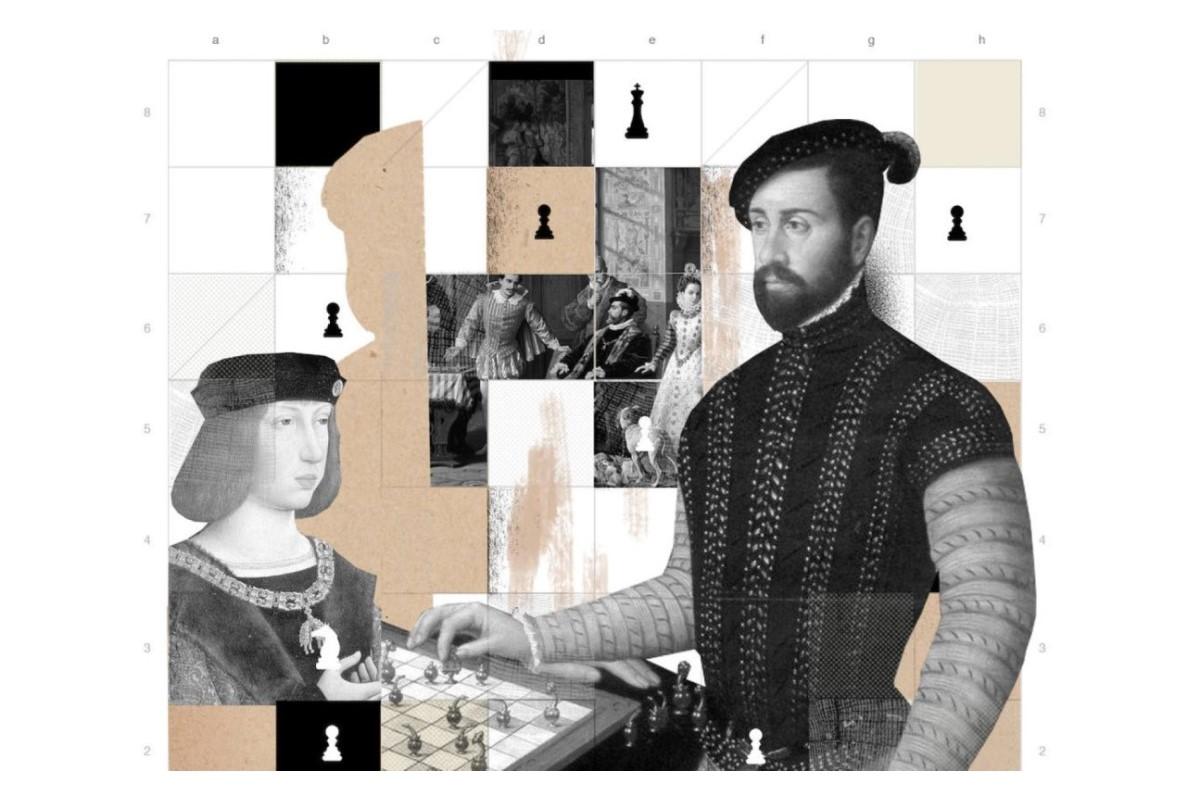
When we dive into the roots of competitive chess, one name stands out as a true pioneer: Ruy López de Segura. Born around 1540 in the town of Zafra, Extremadura, specifically on Tetuán Street, this extraordinary figure didn’t just play the game; he helped define how we understand it today. While some folks argue whether his last name was Segura or Sicura, it’s mostly a byproduct of the diverse cultural shifts in his homeland, where Celts, Romans, Moors, and Christians all left their mark on the local geography and naming conventions.
Beyond his prowess on the 64 squares, López climbed the ecclesiastical ladder to become a Bishop, a position likely aided by his family’s social standing. This influence extended to his brother, Alonso, who transformed their family residence into a Hospital for Convalescents, showing that the family’s impact on Zafra went far beyond intellectual pursuits. Ruy López remains a figure of legend, bridging the gap between the slow-paced medieval games and the dynamic strategic battle we recognize as modern chess.
The Evolution of the Modern Game
To appreciate the genius of Ruy López, we have to look at what chess was like before him. Back in the 15th century, the game was a bit of a drag; the bishop could only jump two squares, and the queen didn’t even exist in her current form. Instead, there was the «alferza,» a piece with very limited movement. The game changed forever around 1475 with the publication of «Scachs d’amor,» a poem by three Valencian poets that introduced the modern movements of the queen, sparking a revolution in speed and lethality.
Shortly after, authors like Francesc Vicent and the mysterious Lucena published works that laid the theoretical foundations of the game. By the time Ruy López entered the scene, the «mad queen’s chess» was starting to bloom. López took this momentum and ran with it, publishing his own masterpiece in 1561, titled «Libro de la Invención Liberal y Arte del Juego del Ajedrez,» a work that cements his status as the first professional chess master. In this book, he didn’t just list moves; he attempted to provide a systematic analysis of openings and practical play.
Interestingly, López was a bit of a prankster when it came to the psychological side of the game. In his writings, he suggested that if you were playing during the day, you should position your opponent facing the sun so the glare would distract them. If the match happened at night, he advised placing the lamps so that the opponent’s own hand would cast a shadow over the board. It just goes to show that back then, winning was everything, and psychological warfare was part of the deal.
The First Unofficial World Champion
The pinnacle of his competitive career came when King Philip II, a massive chess enthusiast, invited him to the royal court in Madrid. The goal was to face off against two Italian masters, who were widely considered the best in the world at the time. This tournament was essentially the first international chess clash of its kind, and the cleric from Zafra came out on top, leading many historians to label him the first world champion, even if there were no official belts or trophies back then.
López didn’t stop there; two years later, he traveled to Rome and once again outplayed the finest players of the era. One of his most legendary moments occurred during the Madrid tournament against Leonardo il Puttino. Instead of using the opening that now bears his name, he shocked the court by playing the first recorded King’s Gambit. It was a bold, aggressive move that completely caught the Italian champion off guard.
The game was a masterclass in precision. After a series of sharp exchanges and a daring sacrifice on f7, López forced the opponent into a disastrous position. The match ended quickly when Leonardo resigned after a crushing sequence of moves, proving that even the smallest mistake, like an incorrect pawn push, can lead to total collapse on the board.
Decoding the Spanish Opening
While the world knows him for the Ruy López Opening (1.e4 e5 2.Nf3 Nc6 3.Bb5), it’s a common misconception that he actually invented it. He did, however, analyze it so thoroughly that it became his legacy. This opening is designed to pressure the knight on c6, indirectly threatening the e5 pawn and fighting for control of the center. Many players call it the «Spanish Torture» because the white pieces often maintain long-term pressure that is incredibly hard for black to shake off, contributing to the legacy of Ruy López and the Spanish Opening.
Depending on how the opponent reacts, the game can branch into several famous variations:
- The Main Line: Black plays 3…a6, forcing the bishop to retreat and preparing a long-term battle for the center.
- The Closed Variation: Black places the bishop on e7, keeping a solid structure.
- The Berlin Defense: Known as the «Berlin Wall,» this is a rock-solid response often leading to an early queen exchange and a drawish but stable position.
- The Exchange Variation: White captures the knight on c6, doubling black’s pawns and creating a strategic endgame advantage.
- The Open Variation: Black captures the e4 pawn to gain active piece play in exchange for space.
- The Schliemann-Jaenisch Gambit: An aggressive counter-attack where black plays 3…f5 to create immediate chaos.
- The Marshall Attack: A brilliant sacrifice of a pawn by black to launch a devastating assault on the white king.
For those trying to defend against this opening, the Berlin Defense remains the safest bet, famously used by Kramnik to neutralize Kasparov. On the other hand, the Archangel Variation is perfect for those who love tactical fireworks and open positions, utilizing the bishop pair to create counterplay.
From the dusty streets of Zafra to the halls of the Spanish royalty, Ruy López de Segura transformed a leisure activity into a rigorous intellectual discipline. His contributions through the first great chess treatise and his dominance over the Italian masters paved the way for every Grandmaster who followed. Whether through the strategic depths of the Spanish Opening or his early experiments with the King’s Gambit, his influence remains a cornerstone of the game, ensuring that the cleric of Zafra is remembered as the true father of professional chess.