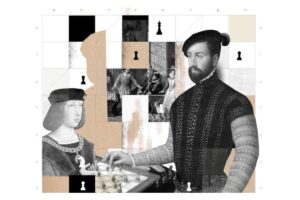
- Ruy López de Segura is recognized as the first unofficial world champion and the first professional chess player in history.
- He authored the seminal work 'Libro de la invención liberal arte del juego del Axedrez' in 1561, laying the foundations for modern chess theory.
- His legacy persists through the Spanish Opening, a complex and enduring strategic system used by elite players globally.
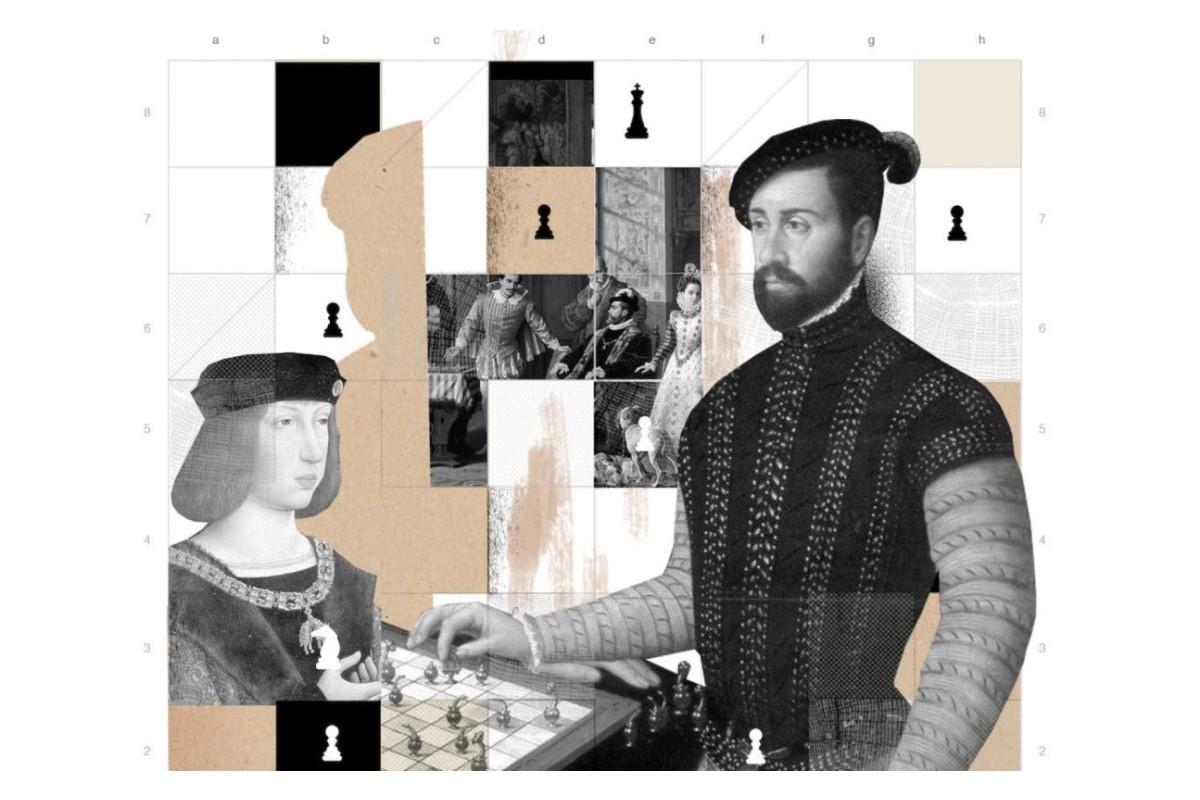
When we talk about the origins of competitive chess, one name towers above the rest from the 16th century:
It is quite a trip to realize that while we now have digital engines and grandmasters everywhere, Ruy López was already playing at a level that would be comparable to a modern Grandmaster. Some estimates, backed by AI analysis of his games, suggest he would have held an
The Man Behind the Legend
For centuries, historians have struggled to pin down the specifics of his life. Many mistakenly believed he was born in Segura de León, but documented evidence confirms he was
Contrary to some romanticized myths, Ruy López was not the bishop or the personal confessor to Philip II, although he was indeed a presbyter of the Order of Saint Benedict. He was a polymath, a scholar of grammar, and an intellectual who didn’t shy away from controversy. In fact, he was known to be quite polemical, which might explain why he eventually sought a new life in Peru, leaving the Iberian Peninsula behind.
The Birth of Chess Theory
In 1561, he published his masterpiece,
One of the most fascinating aspects of his era was the evolution of the rules. Ruy López dealt with a game that had recently undergone a revolution, moving away from the slow medieval pace to the modern «Queen’s chess». He even advocated for a two-move castling process and utilized a «king jump»—a rule where the king could move like a knight or bishop on its first move to escape mate—which would absolutely break any modern engine’s evaluation.
The Unofficial World Champion
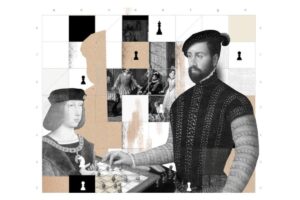
While official world championships didn’t exist until 1886 with Steinitz, Ruy López is widely regarded as the first unofficial world champion. This title stems from his legendary dominance, particularly in a tournament organized by King Philip II in Madrid in 1575. There, he faced the best Italian masters of the age, including the famous Leonardo da Cutri, known as ‘Il Puttino’.
Despite some Italian sources attempting to diminish his achievements—part of a historical rivalry similar to a sports feud—records such as the Polerio manuscripts show that Ruy López did not lose a single game in those exhibitions. He didn’t just win; he dominated. In a famous encounter against Il Puttino, he employed what might be the first King’s Gambit in history, winning the game in just 12 moves after a critical error by the Italian master.
The Spanish Opening: A Global Legacy
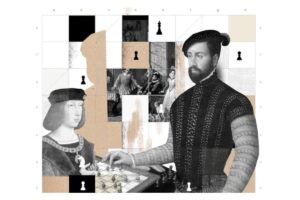
Most people today know Ruy López through the Spanish Opening (1.e4 e5 2.Nf3 Nc6 3.Bb5). While he didn’t necessarily «invent» the moves, he was the first to analyze them deeply. Interestingly, in Spain, it’s called the «Spanish Opening,» but globally, it’s referred to as the «Ruy López,» perhaps as a way to honor the man rather than the nation during the geopolitical shifts of the 16th and 17th centuries.
This opening remains a staple for elite players due to its flexibility and long-term pressure. It branches into several famous variations:
Beyond the board, Ruy López believed in psychological warfare. He suggested that if playing during the day, the opponent should face the sun so the glare would distract them, and at night, the lamp should be placed to the right of the opponent so their own hand would cast a shadow over the pieces.
This extraordinary figure from Zafra bridged the gap between the mystical origins of the game and the professional analysis we see today. From his meticulously documented life in Extremadura to his intellectual battles with Italian masters and the enduring popularity of the Spanish Opening, he remains the ultimate pioneer of professional chess, proving that the pursuit of mastery is a timeless endeavor.