- Ruy López is recognized as the first unofficial world champion and the first professional chess player in history.
- His seminal work, "Libro de la invención liberal arte del juego del Axedrez", laid the foundation for modern chess theory.
- The Spanish Opening, known globally as the Ruy López, remains one of the most prestigious and analyzed systems in elite chess.
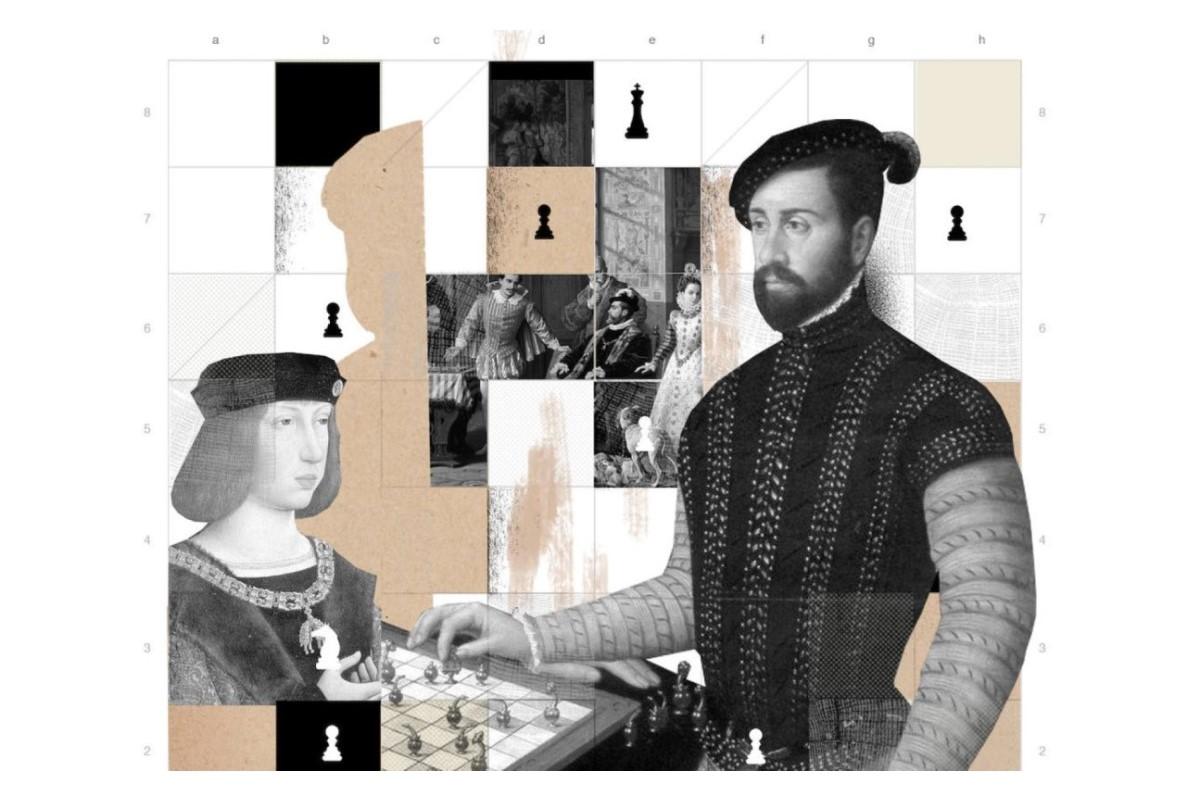
When we talk about the roots of competitive chess, one name stands above the rest from the 16th century: Ruy López de Segura. Born around 1540 in the town of Zafra, Extremadura, this Spanish cleric wasn’t just a man of faith but a true pioneer of the 64 squares. While many know him only through the opening that bears his name, his actual life story is a fascinating mix of academic brilliance and sporting dominance that paved the way for everything we know about professional chess today.
For a long time, Ruy López remained a somewhat obscured figure, often overshadowed by legends or misinterpreted by foreign historians. However, recent deep-dive research, including a monumental 500-page study by Daniel and Francisco de Asís Gragera, has shed light on the «hidden side of the board». From correcting the location of his family home in Zafra to debunking myths about his defeats, we are finally getting a clear picture of a man who was essentially the first Grandmaster of the Spanish-speaking world.
The Path to the Unofficial World Championship
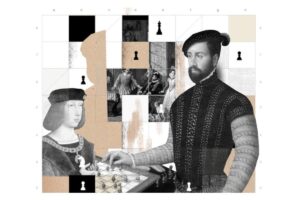
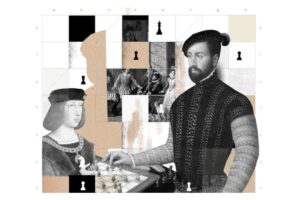
Back in the day, there were no official FIDE titles or structured world championships. Yet, Ruy López is widely regarded as the first unofficial world champion. This status comes from his sheer dominance during the Renaissance. One of the most iconic moments of his career occurred in 1575, when King Philip II invited him to court to face off against the best Italian masters of the era, including the famous Leonardo il Puttino.
In these encounters, López didn’t just win; he revolutionized the game. In a legendary match from Madrid, he employed a King’s Gambit—likely one of the first recorded instances in a high-level competition—to dismantle Il Puttino in a brief but brutal game. His skill level was so advanced that modern AI analysis suggests he would have held a rating of around 2500 ELO, a staggering feat for the 16th century.
A Legacy Written in Ink: The Great Treatise
Beyond his practical wins, Ruy López was a scholar. In 1561, he published the Libro de la invención liberal arte del juego del Axedrez. This wasn’t just a manual; it was the cornerstone of chess theory for two centuries until Philidor arrived. In it, he broke down the phases of the game, analyzed openings, and even gave some cheeky psychological advice, such as positioning your opponent so the sun would glare in their eyes during a match.
The influence of this book was massive, seeing translations into French, German, Italian, and even Russian. It shifted chess from a casual pastime of the nobility into a structured science. Interestingly, while we call the «Spanish Opening» the Ruy López internationally, in Spain it’s simply the Española, highlighting a subtle cultural divide in how his global brand is perceived.
The Technicality of the Ruy López Opening
For those who play the game, the Ruy López (1.e4 e5 2.Nf3 Nc6 3.Bb5) is a beast of a system. Its primary goal is to pressure the knight on c6, indirectly attacking the e5 pawn and fighting for the center. It’s often called the «Spanish Torture» because of the long-term positional pressure it exerts on the black pieces, forcing them into a complex strategic struggle.
- The Main Line: Characterized by 3…a6 and the retreat to a4, leading to a slow, grinding battle for center control.
- The Berlin Defense: A rock-solid wall often used to force draws, famously utilized by Vladimir Kramnik against Garry Kasparov.
- The Exchange Variation: Where White captures the knight on c6 to create doubled pawns for Black, simplifying the game.
- The Marshall Attack: A daring gambit where Black sacrifices a pawn for a devastating initiative against the white king.
It is worth noting that the game in the 1500s had some wildly different rules. Ruy López often utilized the «king’s jump,» a primitive move where the king could move like a knight or bishop on its first move to escape checkmate. While that’s long gone, his fundamental understanding of piece coordination remains relevant in every modern engine analysis.
Debunking Myths and Historical Shadows
History isn’t always kind, and Ruy López suffered from a sort of «Black Legend» designed by rivals to diminish his stature. For instance, some Italian sources claimed he copied manuscripts to write his book, or that he lost to Italian masters. However, documented evidence from the Polerio manuscripts shows no recorded defeats for the Spaniard in those specific clashes, proving that the narrative of his failure was often a fabrication born of nationalistic pride.
Even his personal life was full of intrigue. Far from being a simple priest, he was a polymath and a polemicist who didn’t shy away from criticizing the intellectuals of his time. Some historians believe his sudden departure for Peru was a move to escape the enemies he made in the Spanish peninsula due to his outspoken nature.
The figure of Ruy López de Segura represents the bridge between the medieval’s slow-paced game and the dynamic, theoretical approach of the modern era. From the streets of Zafra to the courts of Philip II, his journey from a scholarly cleric to the architect of the Spanish Opening cements his place as the first true professional of the royal game, leaving a blueprint that every Grandmaster still follows today.