- Recognized as the first unofficial world champion and the pioneer of professional chess theory.
- Author of the influential 1561 treatise that shaped the game's understanding for two centuries.
- A multifaceted figure of the 16th century who blended religious life, royal court service, and strategic mastery.
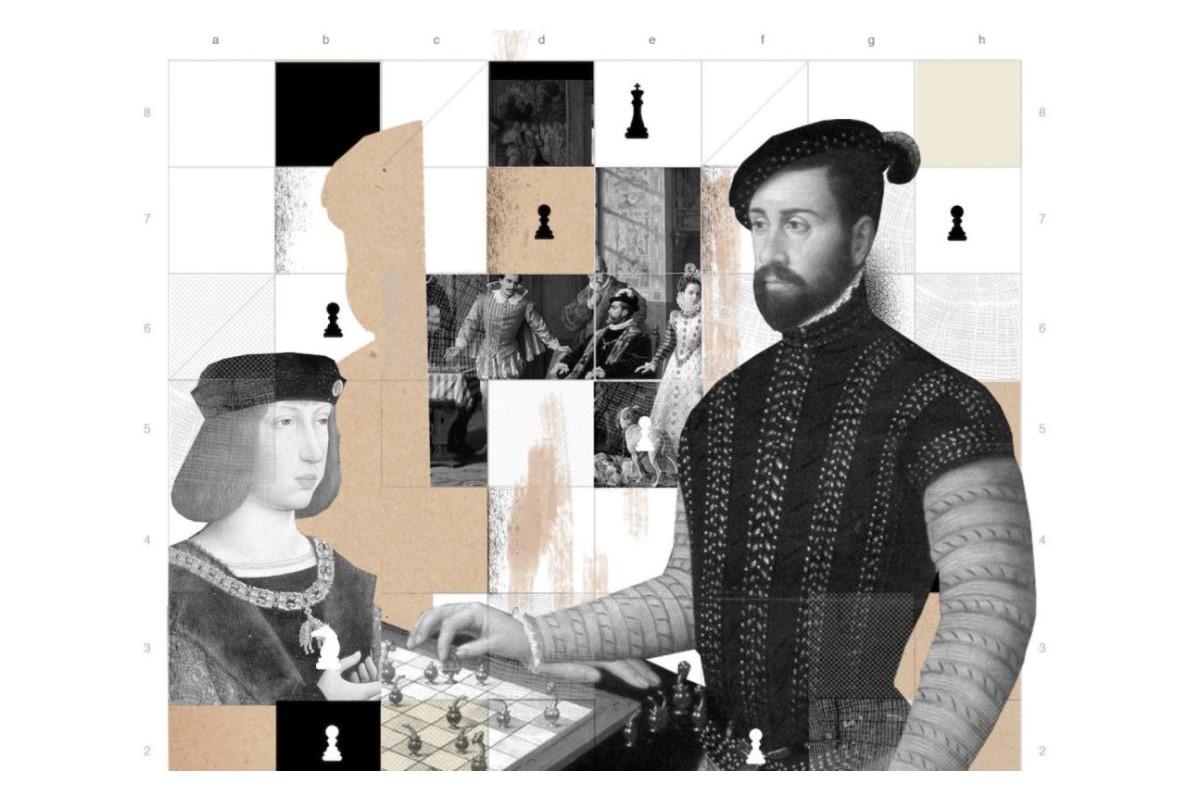
When chess fans mention the Spanish Opening, they are invoking the name of a man who lived centuries before the modern era of Grandmasters. Ruy Lopez de Segura wasn’t just some random player; he was a true trailblazer who shifted the game from a slow, courtly pastime into a rigorous intellectual discipline. Born around 1540 in the town of Zafra, Extremadura, he navigated a world where the rules of the game were still evolving, emerging as a towering figure of the Renaissance.
It’s quite a trip to realize that Lopez was a Benedictine priest and a scholar, proving that a man of faith could also be a ruthless competitor on the 64 squares. His influence was so massive that he is widely regarded as the first unofficial world champion, long before the formal titles we see today. While he remains a bit of a mystery to the general public, his strategic fingerprints are found in almost every high-level game played today, making him the grandfather of modern chess theory.
The Man Behind the Legend
For a long time, the specifics of Ruy Lopez’s life were shrouded in myth or simply forgotten. However, recent deep-dive research by Daniel and Francisco de Asís Gragera has shed light on the real man. Through a monumental study involving hundreds of documents, they’ve managed to correct historical errors, such as the exact location of his family home in Zafra, which had been wrongly marked for decades. Their work proves that Lopez was not just a hobbyist but a polymath, an expert grammarian, and a man of immense culture.
One of the most intriguing parts of his persona was his polemic nature. He didn’t hold back when criticizing the intellectuals of his time, which likely created a trail of enemies in his wake. Some historians suggest this friction might have been why he eventually set sail for Peru with his brothers, seeking a fresh start in the New World. This blend of religious devotion and fiery personality makes him a far more complex character than the dry figures usually found in history books.
Writing the Blueprint for Victory
In 1561, Lopez published a game-changer titled Libro de la invención liberal arte del juego del Axedrez. This wasn’t just a collection of moves; it was a comprehensive manual covering everything from basic rules to advanced opening strategies. It was so ahead of its time that it remained the most important chess text for two centuries, until Philidor arrived on the scene. The book was a massive hit, seeing translations in French, Italian, German, and Portuguese, and even influencing early Russian chess literature in the 19th century.
What’s really funny is that Lopez’s advice went beyond the board. He suggested some psychological warfare that you wouldn’t expect from a priest, such as positioning the board so the sun shone directly into the opponent’s eyes during the day, or placing the candles to the right of the rival at night so their own hand would cast a shadow. He believed that in chess, as in war, every advantage counts, no matter how cheeky the tactic.
The First Professional Clash
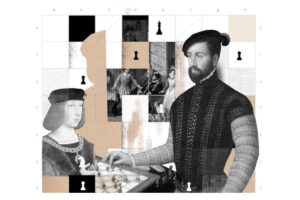
The pinnacle of his playing career occurred when King Philip II, a huge chess enthusiast, invited him to court to face the best players from Italy. This setup created what many consider the first truly international professional tournament. Lopez didn’t just participate; he dominated. His victory over the Italian master Gio. Leonardo da Cutri, known as ‘Il Puttino’, cemented his status as the top player of the age. While some later Italian authors tried to downplay his success or claim he copied others, the manuscripts of Polerio show that he was virtually unbeatable.
Interestingly, while the world knows the «Ruy Lopez» opening, in Spain, it’s simply called the Apertura Española. This distinction often stems from a bit of international bias; by naming it after the man rather than the country, some sources subtly detached the game from the Spanish global hegemony of the 16th century. Despite this, his tactical brilliance is undeniable. AI analysis of his surviving games suggests he would have operated at a Grandmaster level, with an estimated ELO rating around 2500, which is mind-blowing for the 1500s.
Evolution of the Game and Curious Rules
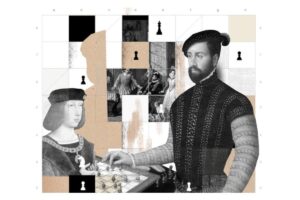
Lopez played during a revolutionary transition. Before his time, the game was painfully slow; the bishop only jumped two squares and the queen didn’t even exist as we know her—there was a piece called the alferza that only moved one square diagonally. The modern era of chess began around 1475 with the ‘Scachs d’amor’ poems in Valencia, and Lopez was one of the first to master these newly energized rules.
He also held some unique views on how the game should be played. For instance, he preferred the two-move castling process, arguing that moving two pieces in one go was too much of an advantage. More wild still was the «king jump», a rule used back then where the king could leap like a knight or a bishop on its very first move to escape a checkmate. If that rule existed today, it would completely wreck modern opening theory and turn every endgame on its head.
A Lasting Intellectual Footprint
The impact of Ruy Lopez transcends the mere moves on a board. He proved that chess could be studied scientifically, moving away from mere intuition and toward a structured theory of the game. From his battles in Madrid and Rome to his lasting influence on global literature, he represents the bridge between the medieval curiosity and the professional sport we love today. His life, filled with royal courts, religious duties, and strategic brilliance, continues to fascinate historians and players alike.
The legacy of the zafrense cleric is preserved not only in the Spanish Game but also in the recovered archives of Extremadura and the specialized libraries of the world. By blending academic rigor with competitive fire, he established the standard for what it means to be a professional player, leaving behind a blueprint of victory that still resonates every time a player pushes a pawn to b5.