- Ruy López de Segura is recognized as the first unofficial world champion and the pioneer of modern chess theory.
- His influential 1561 treatise established the foundations of the game's strategic analysis for centuries.
- The Spanish Opening, known globally as the Ruy López, remains one of the most prestigious and complex openings in elite play.
- Recent historical research has debunked myths and precisely located his ancestral home in Zafra.
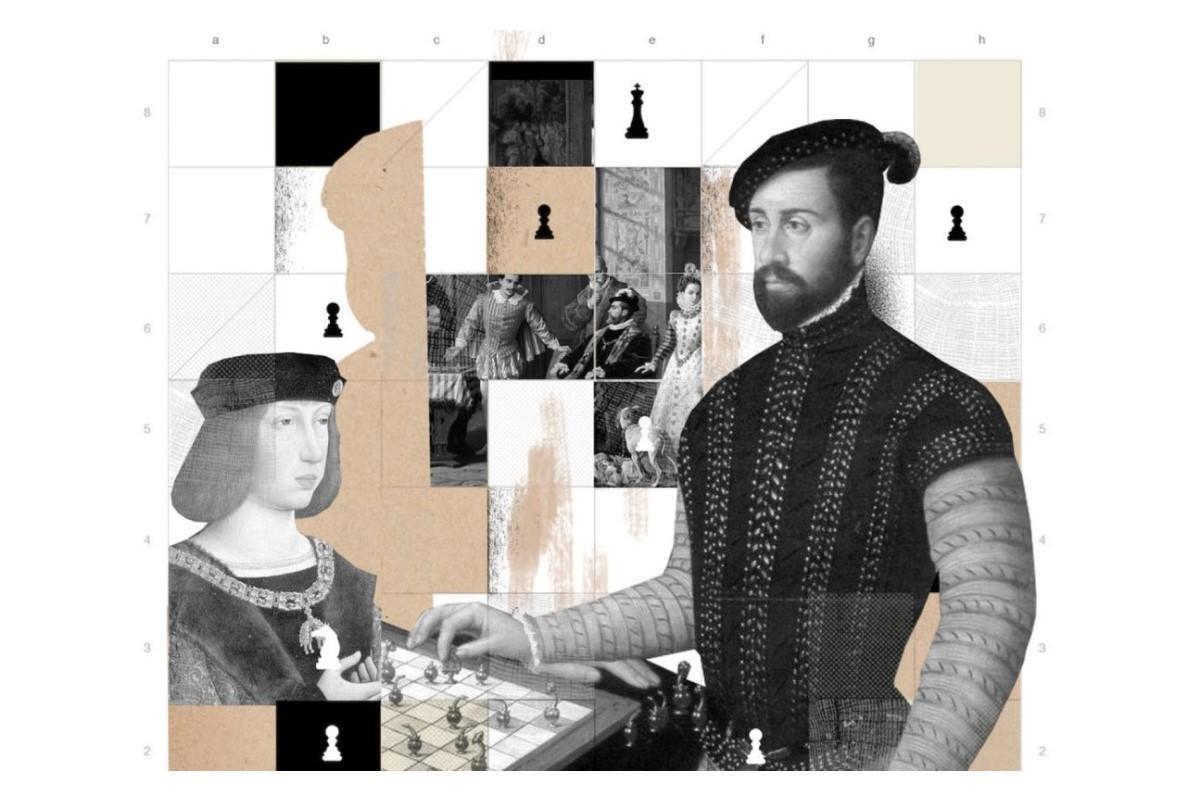
When we dive into the roots of competitive chess, one name stands above the rest from the Renaissance era: Ruy López de Segura. Born around 1540 in the town of Zafra, Extremadura, this Spanish cleric wasn’t just a casual player but is widely regarded as the first professional chess player in history. While the formal world championship title didn’t exist until the late 19th century, López earned the title of unofficial world champion through his sheer dominance over his contemporaries.
Far from being just a skilled practitioner, he was a true polymath—an erudite grammarian and a member of the Order of Saint Benedict. His intellectual curiosity led him to treat chess not as a mere pastime, but as a liberal art that required rigorous study. This shift in perspective changed the game forever, moving it away from the slow, romanticized pace of the origins of chess toward the strategic depth we recognize today.
The Master’s Magnum Opus and Theory
In 1561, Ruy López published a groundbreaking work titled Libro de la invención liberal arte del juego del Axedrez. This wasn’t just a rulebook; it was the first major piece of chess theory, analyzing chess openings and various phases of the game. It remained the most influential text in the world for nearly two centuries, until Philidor’s writings emerged. The book was so revolutionary that it was translated into multiple languages, including French, Italian, German, and Portuguese, and even influenced early Russian chess literature in the 19th century.
His approach to the game was quite comprehensive. He didn’t just focus on the moves but also on the psychological and physical environment of the match. For instance, he cheekily suggested that if a game was played during the day, the opponent should face the sun to be distracted by the glare. At night, he recommended placing the light source to the right of the opponent so their own hand would cast a shadow on the board, proving that he viewed chess as a battle of wills where every tiny advantage mattered.
The Legend of the Spanish Opening
Most people today know Ruy López through the Spanish Opening (1.e4 e5 2.Cf3 Cc6 3.Ab5). Interestingly, while the opening bears his name globally, in Spain it is simply called the «Spanish.» This naming discrepancy is partly due to the historical prestige of Spain during the 16th century; calling it the «Ruy López» in other countries was a way of referencing the Spanish brand of chess without necessarily glorifying the nation. This opening is designed to put pressure on the c6 knight, indirectly threatening the e5 pawn and fighting for central control.
Because of its complexity, the Ruy López is often dubbed the «Spanish Torture» by those playing the black pieces. It is a flexible system that can lead to both sharp tactical clashes and slow, positional grinds. Modern Grandmasters still use it, and as some experts suggest, mastering the Ruy López is almost synonymous with mastering the game of chess itself due to the deep understanding of structures it requires.
Uncovering the Truth: Zafra and the Myths
For a long time, the details of Ruy López’s life were shrouded in mystery or distorted by nationalistic narratives. Some historians incorrectly claimed he was born in Segura de León, but rigorous archival research conducted by Daniel and Francisco de Asís Gragera has confirmed his roots in Zafra. They even managed to find the exact location of his family home, correcting a plaque that had been wrongly placed since 1975. This level of dedication involved translating Old Castilian documents and consulting thousands of records from global libraries, such as the massive collection in Cleveland.
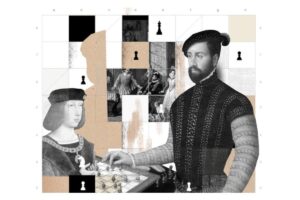
There are also several legends that simply aren’t true. While some stories claim he was the confessor or advisor to King Philip II, the evidence shows he was a presbyter cleric but didn’t hold those specific high-court positions. Another common myth is that he lost to the Italian master Gio. Leonardo da Cutri, known as ‘Il Puttino’. However, historical annotations by Polerio suggest that Ruy López remained undefeated in those encounters, contradicting later paintings that falsely depicted an Italian victory to favor their own national pride.
Competitive Prowess and Historical Matches
The peak of his fame came when King Philip II invited him to court to face the most prestigious Italian masters of the time. It was in this environment that he cemented his status as the best player of his era. In a famous match from 1575 against Leonardo il Puttino, Ruy López utilized a King’s Gambit—a bold move that surprised the court—and secured a victory in a brief but clinical game. His skill level was so high that modern AI analysis suggests he would have been equivalent to a Grandmaster with an ELO of around 2500 in today’s terms.
Beyond the standard moves, Ruy López experimented with rules that have since vanished. He preferred a two-move castling process and utilized a «King’s jump,» where the king could move like a knight or a bishop in its first move to escape an inevitable checkmate. While these rules would break modern theory, they reflect the evolving nature of the game during the Renaissance transition.
Diverse Variations of the Opening
- The Main Line: Characterized by 3…a6, where White retreats the bishop to a4, preparing for a long-term battle for the center.
- The Closed Variation: Black develops the bishop to e7, keeping the position solid and tucked within the pawn chain.
- The Berlin Defense: Known as the «Berlin Wall,» this is a rock-solid response that often leads to early queen trades, famously used by Kramnik to challenge Kasparov.
- The Exchange Variation: White captures on c6 to double Black’s pawns, creating a specific structural advantage in the endgame.
- The Open Variation: Black captures on e4, opting for an active piece game over space.
- The Marshall Attack: An aggressive gambit where Black sacrifices a pawn to launch a devastating assault on the white king.
Ruy López de Segura was more than just a man who played a game; he was a visionary who transformed chess into a disciplined study of logic and strategy. From his humble beginnings in Zafra to his influence on global opening theory and his legendary clashes with Italian masters, he remains the definitive blueprint for the professional chess player. His legacy lives on every time a player moves their bishop to b5, continuing a tradition of excellence that has spanned over four hundred years.