- Ruy López is recognized as the first unofficial world champion and the first professional chess player in history.
- He authored the seminal work 'Libro de la invención liberal arte del juego del Axedrez' in 1561, shaping chess theory for two centuries.
- His legacy persists through the famous Spanish Opening, known globally as the Ruy López.
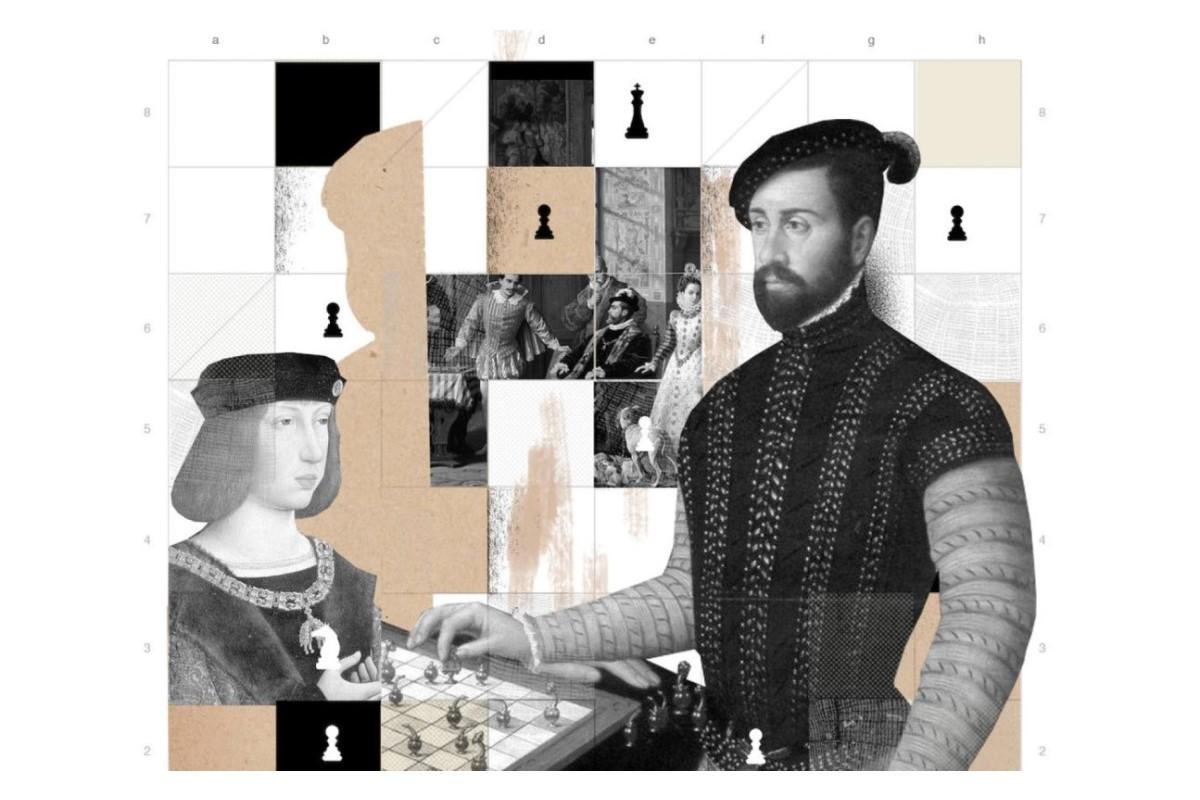
When we dive into the roots of competitive chess, one name stands out above the rest: Ruy López de Segura. Born around 1540 in the town of Zafra, Extremadura, this Spanish cleric wasn’t just a man of faith, but a true pioneer of the 64 squares. While many today only know him through a specific opening, he was actually the first professional chess player in history, blending scholarly intellect with a fierce competitive spirit that terrified his opponents in the 16th century.
His story is often shrouded in mystery or clouded by historical inaccuracies, but recent deep-dives by researchers like Daniel and Francisco de Asís Gragera have brought the truth to light. From his monumental influence on game theory to his clashes with Italian masters, Ruy López represents the transition from medieval pastime to a structured, intellectual sport. He was a polymath, a grammarian, and a scholar whose passion for the game helped define the modern era of chess.
The Life and Legend of the Zafrense Cleric
Ruy López was a man of many talents, serving as a cleric presbyter of the Order of St. Benedict. Contrary to some popular myths, he wasn’t the bishop or confessor to King Philip II, though he certainly moved in influential circles. His life was marked by a restless intellect; he was known to be quite polemical, often criticizing the scholars of his time, which likely contributed to his eventual decision to leave Spain for Peru alongside his brothers, Alonso and Pedro.
For centuries, his exact origins were debated, but historical records confirm he was born in Zafra, specifically in a house that later became the San Ildefonso Hospital. This location was only recently corrected via a new commemorative plaque in 2025, after years of archival research. His status as the first unofficial world champion stems from his dominant performances, most notably during a tournament in Madrid where he outclassed the best players of the age.

Revolutionizing the Game: The 1561 Treatise
The real turning point for the game occurred in 1561 when he published the «Libro de la invención liberal arte del juego del Axedrez». This wasn’t just a rulebook; it was the foundation of chess theory for the next two hundred years. In it, he analyzed openings and strategies with a level of depth never seen before, making it the most influential chess text until the arrival of Philidor.
López didn’t stop at the technical side; he even suggested psychological tactics to unsettle rivals. For instance, he advised that if playing during the day, the opponent should face the sun to be distracted by the glare. If playing at night, the lighting should be placed to the right of the adversary so that their own hand cast a shadow over the board. In his eyes, chess was as much about warfare and mental edge as it was about logic.
Clashes with the Italian Masters
The rivalry between the Spanish and the Italians was the «Super Bowl» of the 16th century. Ruy López faced off against Gio. Leonardo da Cutri, famously known as «Il Puttino». While some later paintings and biased historians tried to claim the Italian won, the manuscripts of Polerio suggest that the Spaniard remained undefeated in these encounters.
One legendary game from 1575 in Madrid stands out, where López utilized a King’s Gambit—a daring move that surprised the court. The game ended in a swift victory for the Spaniard after a crucial error by Il Puttino on the fifth move (5… dxe5 instead of 5… d5), leading to a devastating attack and resignation. This dominance solidified his reputation as the top player of his era.
The Evolution of Rules and ELO Estimation
Chess in the 1500s was slightly different from today. Ruy López preferred the two-move castling method, believing that moving two pieces in one go gave too much of an advantage. Even more curious was the «King’s jump», a rule he used frequently to escape checkmate, allowing the king to move like a knight or a bishop in its very first move.
Modern analysis using Artificial Intelligence has tried to quantify his skill. According to these studies, his level of play and theoretical understanding would translate to a Grandmaster rating of approximately 2500 ELO if he played today. This reinforces the idea that he was truly the first great master of the Spanish-speaking world.
The Legacy of the Spanish Opening
Most people encounter Ruy López today through the Spanish Opening (1.e4 e5 2.Nf3 Nc6 3.Bb5). Interestingly, he didn’t actually invent this opening, but his analysis of it was so profound that it became synonymous with his name. In Spain, it is called the «Apertura Española», while the rest of the world refers to it as the «Ruy López», a naming convention that persists in everything from academic studies to pop culture like The Queen’s Gambit.
The struggle to keep his memory alive was hampered for years by the «Black Legend» and a lack of centralized information. However, thanks to the digitalization of libraries and the work of dedicated historians, the face of the board is finally being revealed. Ruy López was more than just a name in an opening; he was a visionary who professionalized the game and set the stage for every world champion who followed.
From his birth in Zafra and his academic brilliance to his legendary battles against Italian rivals and the creation of the first great chess manual, Ruy López de Segura defined the art of the game. His unrivaled skill, estimated at a modern GM level, and his theoretical contributions ensured that he remains the forefather of modern chess strategy, bridging the gap between the medieval era and the professional sport we recognize today.