- Analysis of the most effective strategies for White to counter the Sicilian, ranging from the Open Sicilian to the Alapin and Anti-Sicilian systems.
- Detailed breakdown of the most influential Black variants such as the Najdorf, Taimanov, and Dragon, including their strategic goals and pawn structures.
- Practical training methodologies including a structured 8-week study plan and essential tactical motifs like the poisoned pawn and d5 outposts.

Tackling the Sicilian Defense can feel like a daunting task for many players, especially those who prefer a more structured approach. Since 1…c5 is the most popular response to 1.e4, it creates an immediate asymmetry on the board, forcing White to navigate a complex web of theoretical lines if they want to maintain an edge. Whether you are a tactical wizard or a strategic grinder, understanding how to handle this opening is pretty much mandatory if you want to climb the rating ladder.
For those who find the theoretical burden of the Open Sicilian a bit too heavy, there are plenty of Anti-Sicilian alternatives that can catch your opponent off guard. The goal is to find a balance between safety and ambition, ensuring that you aren’t just surviving the opening but actually fighting for a winning advantage through a deep understanding of pawn structures and typical piece maneuvers.

Essential Repertoires for White
If you have the stomach for heavy theory, the Open Sicilian (2.Nf3 and 3.d4) is the most principled way to play. This approach challenges Black directly and usually leads to the most explosive positions. Depending on Black’s choice, you might find yourself in a battle for the d5 square or launching a fierce attack on the kingside. It is the go-to choice for players who enjoy double-edged positions and tactical fireworks.
On the flip side, the Alapin Variation (starting with 2.c3) offers a more controlled environment. By supporting the center with a pawn on c3, White aims to establish a classic pawn center. While this often results in an isolated queen’s pawn for White, it drastically reduces the amount of theory you need to memorize compared to the Open lines.
There are also more elusive options, such as lines starting with 2.Nc3 or aggressive gambits where White sacrifices a pawn early on to gain a massive lead in development. These «surprise weapons» are great for leaving your rivals perplexed and taking the game into territory where they haven’t studied.
Deep Dive into Black’s Sicilian Variants
To beat the Sicilian, you first need to know what you’re up against. The Najdorf (5…a6) is legendary for its flexibility. Black’s main goal is to time the …e5 break perfectly and expand on the queenside with …b5. It’s a combative system where the fight for the e5 and d5 squares determines the outcome of the game.
If you prefer something a bit more reliable and less prone to forced draws or instant losses, the Taimanov is a fantastic choice. It avoids committing too early and focuses on a solid, flexible structure. It’s widely considered an inexpugnable position if played correctly, making it hard for White to score quick wins with wild attacks.
The Dragon (…g6 and …Bg7) is all about the race. It often leads to opposite-side castling, where both players launch their pawns at the opposing king. This variant is essentially an exercise in calculation and timing, where one wrong move can lead to an immediate collapse.
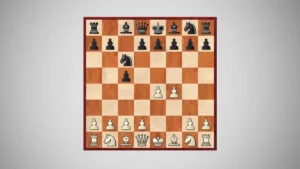
Finally, the Sveshnikov (5…e5) is for the brave. Black voluntarily accepts a hole on d5 and a backward pawn on d6 in exchange for extreme piece activity. White’s strategy here revolves around occupying that d5 outpost and restricting Black’s maneuvers.
Strategic Plans and Tactical Motifs
Winning in the Sicilian isn’t just about memorizing moves; it’s about recognizing patterns. For White, the primary objective is often to control the center and prepare the jump of the knight to d5. Utilizing the f-pawn (f4-f5) or g-pawn (g4-g5) to storm the kingside is a common theme in aggressive lines.
Black, meanwhile, focuses on the queenside expansion. The push …b5-b4 is a critical tool to kick White’s knights and gain space. The timing of the …d5 break is the most crucial decision for Black, as it can either liberate their position or create fatal weaknesses.
Tactically, you must be aware of the Poisoned Pawn in the Najdorf, where capturing on b2 can be a double-edged sword. Other common themes include Greek Gift sacrifices on h7 and the constant pressure along the open c-file, which often becomes the highway for Black’s rooks to penetrate the white camp.

The 8-Week Mastery Roadmap
Building a playable repertoire takes time and discipline. A solid approach starts with choosing a specific branch (like the Najdorf or Taimanov) and mastering the first 10 moves. Once the foundation is set, the focus should shift to studying pawn skeletons and typical middle-game structures.
During the middle of your training, it’s vital to solve 15-20 Sicilian-specific puzzles daily to automate your tactical responses, a process similar to using a puzle diario de ajedrez to sharpen your vision. Reviewing GM games and distilling their plans into a few key bullet points is much more effective than mindless memorization. Practical application is key: play 10 classical games focusing on a specific plan rather than just trying to win.
The final stage involves refining the endgame. Many Sicilian positions lead to rook endgames where Black’s queenside pawn majority can become a decisive factor. Creating a one-page cheat sheet with critical move orders and recurring motifs is the best way to synthesize everything before stepping into a tournament.
To avoid common pitfalls, always ask yourself the «d5 question» on every move: who controls it and who can occupy it? Avoid the temptation to grab distant pawns if it compromises your king’s safety. Instead of playing passively, always look for active counterplay, as the Sicilian rewards those who keep the tension and create threats.
Mastering this opening requires a mix of deep theoretical study, tactical drilling, and an understanding of the strategic tug-of-war over central squares and flank expansions. By balancing the aggression of the Open Sicilian with the stability of Anti-Sicilian systems and following a disciplined study routine, any player can transform their results against 1…c5 into a consistent source of victory.